
15 Best Employee Engagement Tools to Improve Workplace Engagement in 2026
November 13, 2026 by Jose Kantola
Key Takeaways
- Choose based on your engagement needs: Some tools specialize in employee listening, recognition, and communication, while others focus on leadership support or broader people management.
- Consider Teamspective for leadership enablement: It connects employee engagement and performance insights with company-specific leadership expectations, helping managers understand their teams and take action.
- Look beyond data collection: Prioritize platforms that help managers act on employee feedback, provide useful insights, and support follow-through.
Disclosure: This guide is published by Teamspective. We’ve included our platform alongside competitors and evaluated each against the same criteria. Descriptions are based on publicly available product information, vendor documentation, and pricing as of November 2026.
Employee engagement programs don't necessarily fail because organizations aren't listening. Often, the problem is what happens after employees share their feedback.
Perceptyx's State of Employee Listening 2026 research found that 71% of employees said their organizations shared survey results, but only 59% said managers created action plans, and 51% saw actual improvements. The report also identified HR workload and budget constraints as leading barriers to successful listening programs.
In other words, collecting feedback is only part of the job. Organizations also need the resources and tools to act on it.
That's where the choice of employee engagement software matters. Some platforms help you identify workplace concerns through surveys and analytics. Others make recognition easier, improve internal communication, or give managers better support for addressing team challenges.
This guide compares 15 employee engagement tools across these areas, looking at their key capabilities, best-fit use cases, and limitations to help you decide which platform addresses your organization's priorities.
Summary of the best employee engagement tools for every use case
Which employee engagement tools are best for leadership and team support?
If you want to help managers understand employee feedback and respond to team challenges, consider Teamspective, 15Five, Lattice, and Leapsome. With Teamspective, for instance, employee engagement goals are connected with your company’s leadership expectations. More so, its leadership enablement agent, Lea, can help managers prepare for conversations using that context.
Which employee engagement tools are best for employee listening?
If your priority is understanding how employees feel and tracking changes over time, consider Culture Amp, Qualtrics, Workleap Officevibe, and Workday Peakon Employee Voice. Culture Amp offers research-backed surveys and benchmarking, while Qualtrics is suited to more complex listening programs.
Which employee engagement tools are best for recognition and rewards?
If you want to make employee appreciation more frequent and visible, consider Bonusly, Nectar, Achievers, and WorkTango. Bonusly makes peer-to-peer recognition part of everyday work, while Nectar combines recognition with flexible rewards and administrative controls.
Which employee engagement tools are best for communication and connection?
If employees are missing updates or have limited ways to connect across teams, consider Workvivo and Connecteam. Workvivo combines company news, employee communities, and recognition in a social-style platform. Connecteam is geared toward frontline and deskless teams that need to access communication and work tools on mobile.
Which broader people platform includes employee engagement?
If you want engagement alongside performance, development, and other HR processes, consider Deel Engage. It connects engagement features with Deel’s broader HR platform, which may be useful if you want to manage those workflows in one place.
2026 comparison: Best employee engagement tools by their use case
| Tool | Best for | Pricing |
|---|---|---|
| Teamspective | Helping managers act on employee feedback | From €5.50 / seat / month |
| 15Five | Engagement measurement and manager effectiveness | Engage: $4 / user / month |
| Lattice | Engagement alongside performance and development | Engagement pricing not specified |
| Leapsome | Connecting engagement with performance and learning | From €4 / employee / month, plus platform fee |
| Culture Amp | Research-backed surveys and benchmarking | Contact sales |
| Qualtrics | Complex employee experience surveys and analytics | Contact sales |
| Workleap Officevibe | Continuous team feedback and manager follow-up | From $4,999 / year + $32 / manager / month |
| Workday Peakon Employee Voice | Continuous listening across large organizations | Contact sales |
| Bonusly | Everyday peer-to-peer recognition | Free plan available; paid from $3 / user / month |
| Nectar | Values-based recognition and flexible rewards | Pricing not specified |
| Achievers | Global recognition programs | Contact sales |
| WorkTango | Structured recognition and rewards | Contact sales |
| Workvivo | Internal communication and workplace connection | Contact sales |
| Connecteam | Mobile communication for frontline teams | Free plan available; paid from $29 / month |
| Deel Engage | Engagement alongside performance and development | Engage pricing not specified |
Top Employee Engagement Tools for Leadership and Team Support
Managers need more than survey results to support their teams effectively. These platforms combine employee feedback with performance management, leadership development, and team insights to help managers understand challenges and respond more effectively.
1. Teamspective: Best for Helping Managers Act on Employee Feedback
Collecting employee feedback is only useful if managers know what to do with it. A survey might reveal that a team is struggling with communication or development, but that doesn't automatically tell the manager how to address the problem.
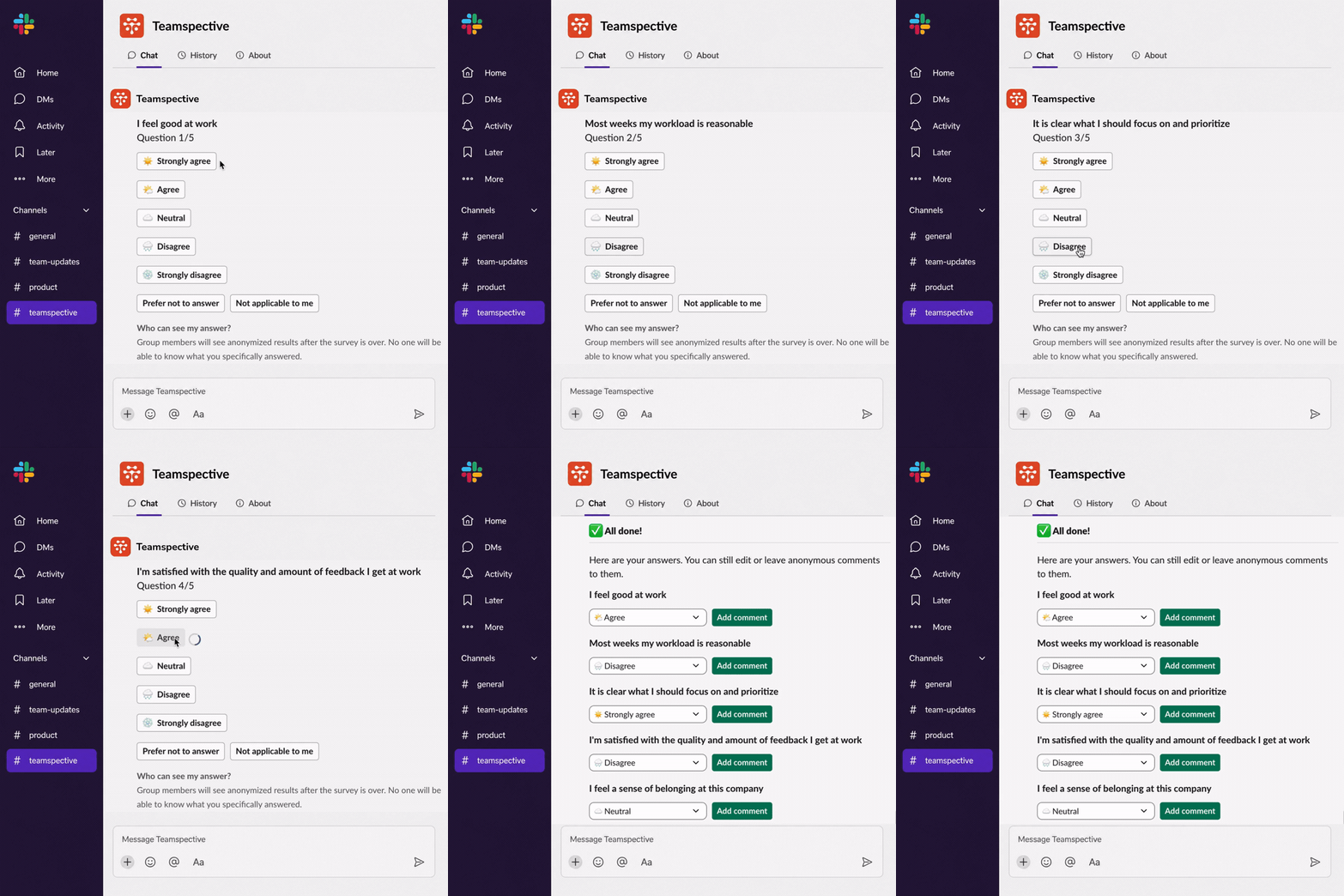
Teamspective helps close this gap by connecting employee feedback and performance insights with the company's strategy, values, and leadership principles. Instead of giving managers survey results without much context, it helps them understand what those insights mean within their teams and how to respond in line with the organization's expectations for good leadership.
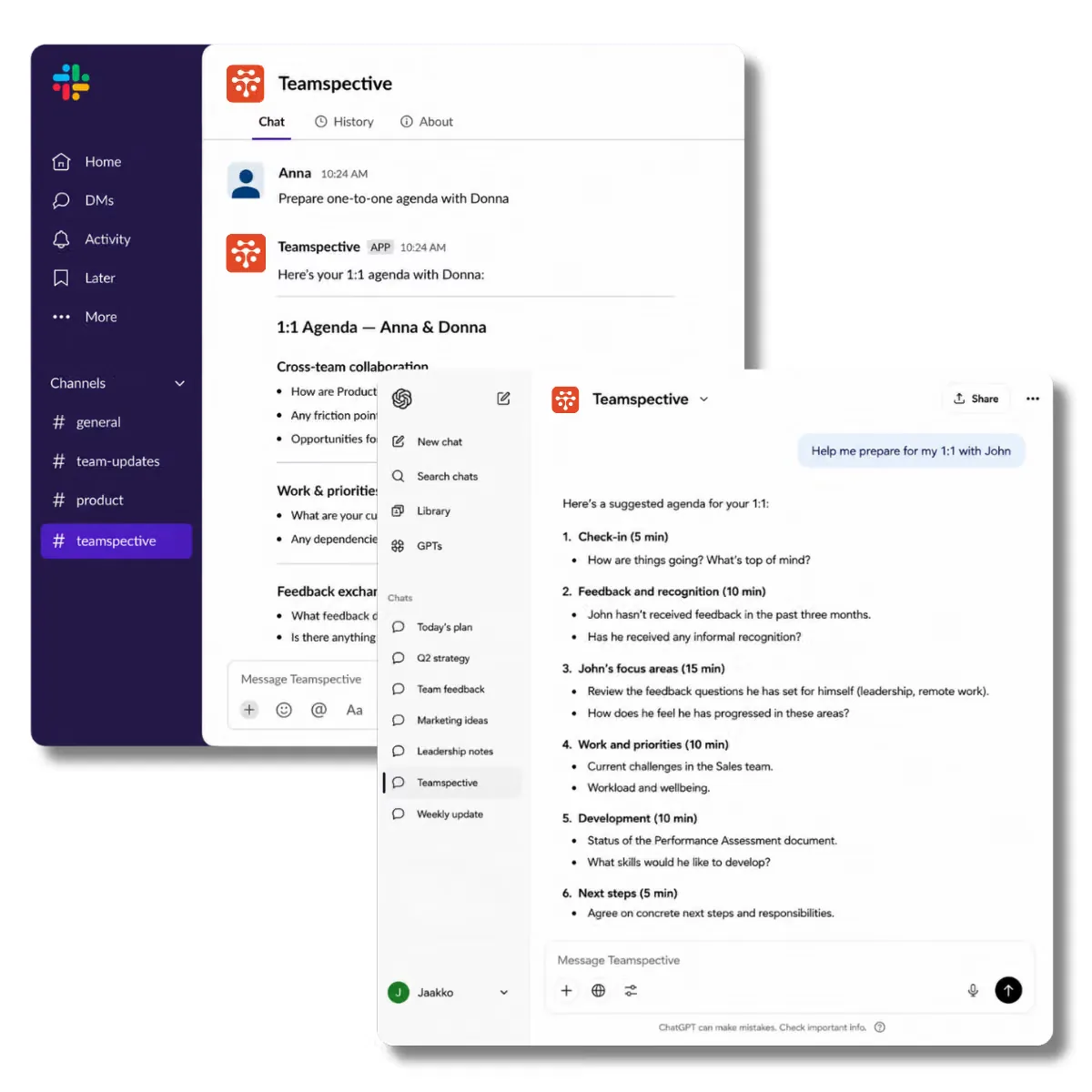
A key part of this approach is Lea, Teamspective's Leadership Enablement Agent. Every manager gets Lea, which uses company-specific information and available team insights to support everyday management tasks. For example, a manager preparing for a difficult 1:1 can use Lea to review relevant feedback, prepare questions, and structure the conversation around the company's leadership principles.
This approach is particularly relevant if you want to move beyond collecting employee feedback and establish more consistent leadership practices across the business.
Here are the key features to look out for
- Engagement surveys and pulse feedback: Collect employee feedback through engagement surveys, pulse surveys, and other listening methods. HR teams can use the results to understand employee sentiment and identify areas that need attention.
- Performance and feedback: Support performance conversations, continuous feedback, and 360-degree feedback. Organizations can connect these processes to their own competency frameworks and leadership expectations.
- Company-specific leadership frameworks: Bring company strategy, values, leadership principles, and competency frameworks into everyday management workflows. This gives managers a clearer reference for understanding what effective leadership looks like within their organization.
- Lea, the Leadership Enablement Agent: Help managers prepare 1:1s and meetings, understand feedback, summarize relevant information, identify potential actions, and follow up on agreed next steps.
- Workplace integrations: Access Lea through Slack, Microsoft Teams, ChatGPT, Claude, and Copilot, while connecting employee information through supported HRIS integrations.
- Organizational Network Analysis (ONA): Examine collaboration patterns to identify organizational silos, cross-team bottlenecks, and influential employees.
What you should keep in mind before buying
Teamspective doesn't offer standalone goal-setting or OKR features. If you are looking for a dedicated platform to set, track, and manage company or individual goals may need a separate tool to support that process.
Pricing
- Standard: Starting at EUR 5.50 per seat/month, up to 300 seats. Price scales with the modules you select.
- Enterprise: Custom quote for 300+ seats.
- Free trial: 14 days for up to 20 seats, all core modules, no credit card required.
Want to improve leadership quality across your organization?
Book a Teamspective demo to see how Lea helps managers turn employee insights into better everyday leadership practices.
Book a Teamspective demo2. 15Five – Best for Engagement Measurement and Manager Effectiveness
If your main priority is understanding how employees feel about their work, 15Five gives you tools to measure engagement and identify where managers may need to step in. But it doesn't stop at collecting employee feedback. The platform also connects engagement measurement with performance reviews, goal management, and manager development.
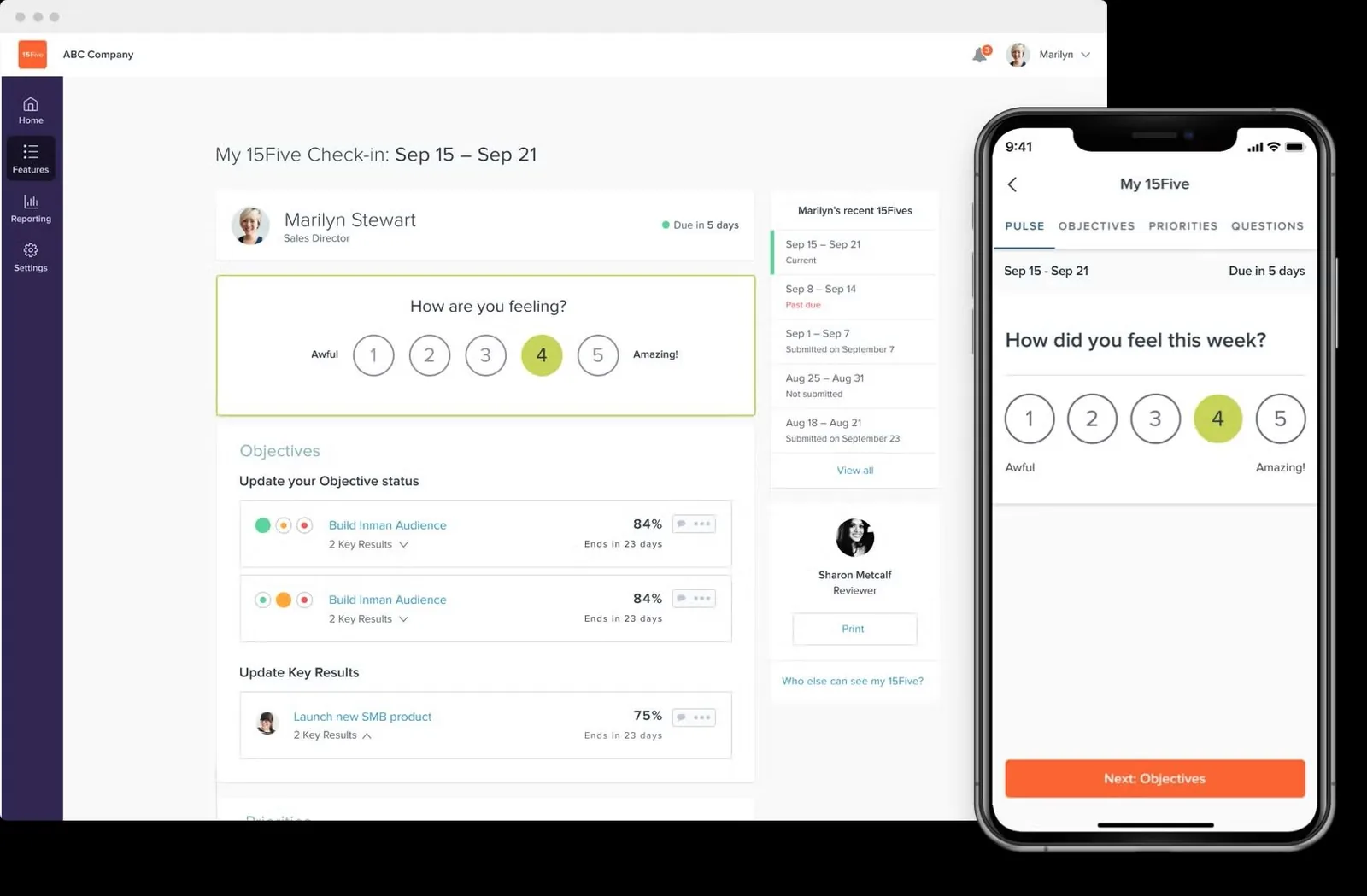
Its Engage plan covers the employee listening side. You can run engagement surveys and targeted assessments, then use heat maps and benchmarking to see how sentiment differs across teams and identify recurring issues. Action-planning tools help HR teams turn those findings into follow-up activities rather than leaving survey results sitting in a report.
Where 15Five becomes more than an engagement measurement tool is through its Perform plan. This adds performance reviews, 360-degree feedback, goal tracking, career development, and structured manager-employee conversations.
Here are the key features to look out for
- Employee engagement surveys
- Action planning
- Engagement analytics
- Performance management
- Manager effectiveness
What you should keep in mind before buying
Check-ins, 1:1s, and formal reviews sit in Perform or Total Platform; the entry Engage plan covers listening and action planning. Manager coaching is an additional purchase.
Pricing
- Engage: US$4 per user/month, billed annually.
- Perform: US$11 per user/month, billed annually.
- Total Platform: US$16 per user/month, billed annually.
3. Lattice – Best for Engagement Within a Broader People Management Platform
While 15Five centers its ecosystem around the loop between survey feedback and manager check-ins, Lattice takes a wider, more holistic approach to the employee lifecycle. It doesn't just ask how your team feels, it lets you connect those sentiment scores directly to career tracks, performance cycles, and everyday manager workflows in the same space.
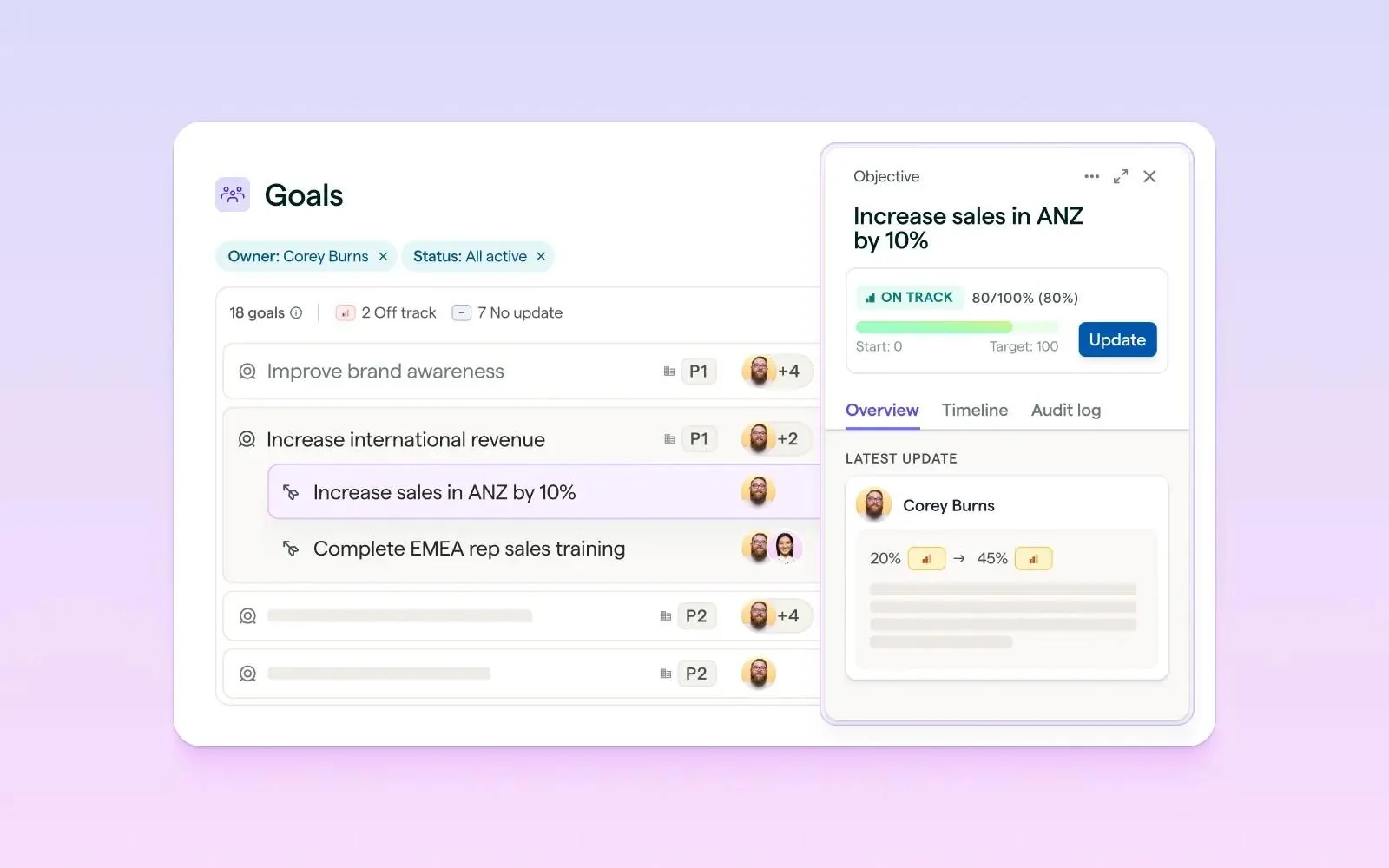
If your goal is to make employee listening part of daily management rather than an HR-led event every six months, Lattice gives your managers direct operational tools to support it. Beyond pulse surveys and eNPS benchmarking, the platform builds check-in habits through structured 1-on-1 agendas, weekly updates, and real-time praise.
Where Lattice really sets itself apart from lighter engagement-only tools is its focus on career growth. Through its competency matrices and career paths, managers can take low engagement scores around "lack of growth" and immediately map out clear developmental milestones for their reports.
Here are some features I'd focus on
- Engagement surveys
- Engagement benchmarking
- AI-assisted analysis
- Performance management
- Employee development
What you should keep in mind before buying
The engagement rate does not represent a full performance-and-development package.
Pricing
- Engagement: US$4 per seat/month, billed annually.
- Performance: US$10 per seat/month.
- Grow: an additional US$4 per seat/month.
- Minimum commitment: US$4,000 annual agreement.
4. Leapsome – Best for Connecting Engagement Surveys With Performance and Learning
While 15Five focuses on manager check-ins and Lattice builds around career growth paths, Leapsome takes integration a step further by bringing learning and development directly into the engagement loop. If your goal is not just to measure employee sentiment, but to immediately launch training modules to fix the gaps your surveys uncover, Leapsome is purpose-built for that workflow.
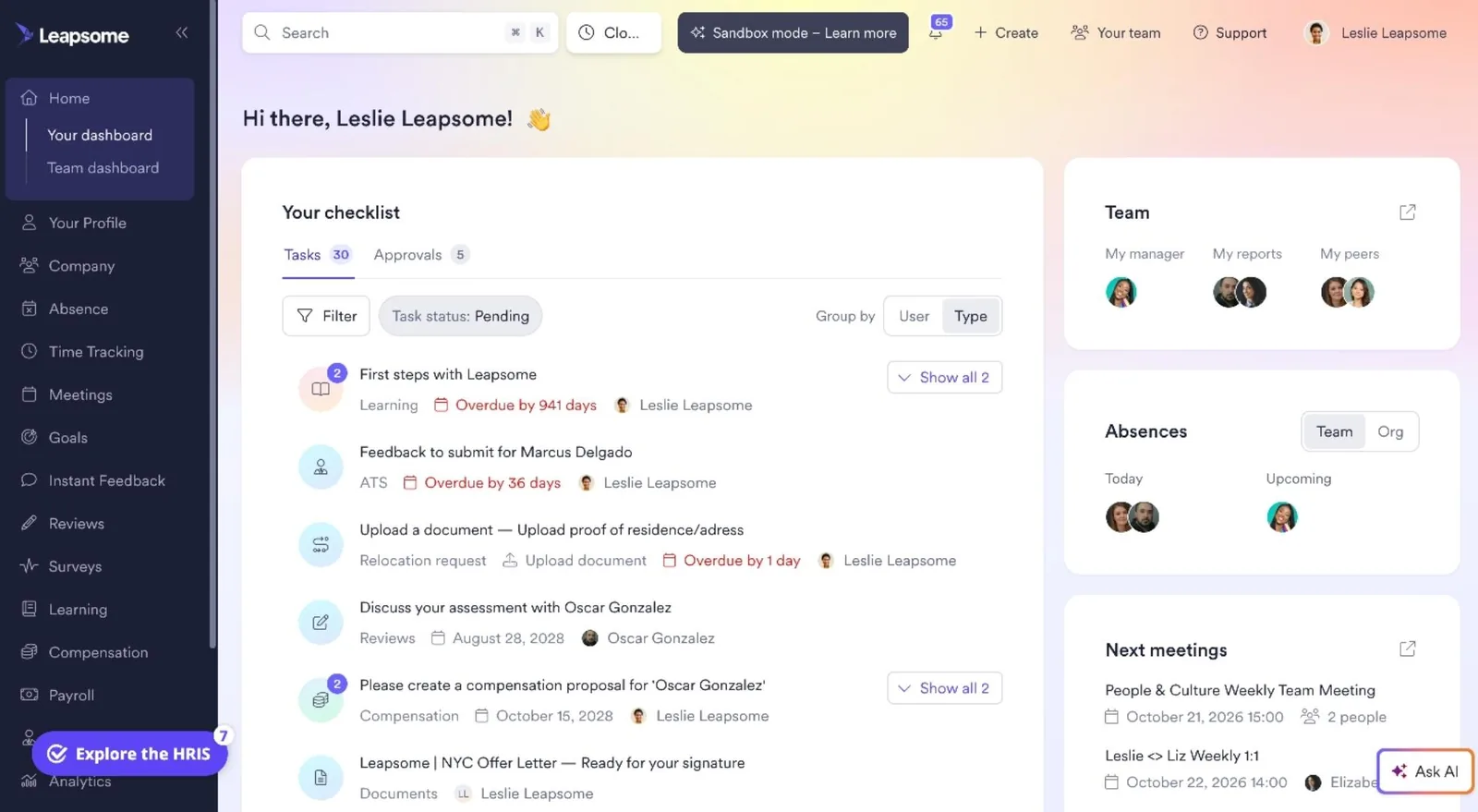
The platform handles standard listening requirements well, offering pulse checks, onboarding/offboarding surveys, eNPS tracking, and AI summaries that pull out recurring themes from open-ended responses. But where Leapsome really sets itself apart is what happens after the survey closes.
For example, if your engagement heatmaps reveal low scores around manager feedback or cross-functional onboarding, you don't have to source third-party training. You can immediately assign targeted learning paths, quizzes, and micro-courses inside the same platform to address those exact operational weak spots.
Here are key features that supports these
- Engagement surveys
- Survey analytics
- AI-powered feedback analysis
- Performance management
- Learning management
What you should keep in mind before buying
Leapsome operates on a modular pricing model. If you only want basic engagement surveys, buying into its broader LMS and performance framework can quickly become overkill, both in cost and admin setup.
Pricing
- Engagement Surveys: €4 per employee/month.
- Learning: an additional €4 per employee/month.
- Performance Reviews: €7 per employee/month.
- Platform: select the underlying HR platform separately.
Top Employee Engagement Tools for Employee Listening
Organizations use employee listening tools to identify workplace concerns and track employee sentiment. These platforms offer surveys, pulse checks, and anonymous feedback, with some adding advanced analytics, benchmarking, and manager follow-up.
5. Culture Amp: Best for Research-Backed Engagement Surveys and Benchmarking
Where 15Five, Lattice, and Leapsome are built as all-in-one people-management platforms where engagement is one component among many, Culture Amp takes a more insight-led approach. It is best known for science-backed employee listening and engagement.
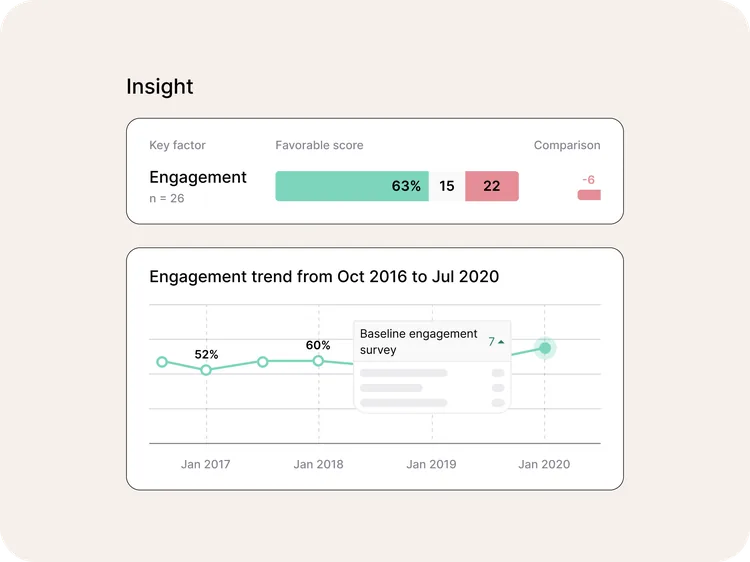
Rather than forcing you to guess what questions to ask, Culture Amp gives you access to thousands of pre-built, science-backed survey templates. Where it really separates itself from lighter tools is its benchmarking data: because thousands of companies use it, you aren't just looking at an internal score in a vacuum, you can see how your engagement, retention risk, and eNPS compare against specific industries, geographies, and company sizes.
Here are other key features to look out for
- Engagement and pulse surveys
- Research-backed templates
- Benchmarking
- AI comment summaries
- Action planning
- Lifecycle surveys
What you should keep in mind before buying
Culture Amp offers more than survey collection, but its broader platform includes separate products for engagement, performance, and development. Organizations should confirm which modules they need and how the pricing changes when they combine them.
Pricing
- Culture Amp: custom quote, billed annually.
- Quote scope: pricing depends on employee count, selected products, and service tier. Request engagement-only and combined engagement-and-performance options if you are considering both.
Exploring other employee listening options? Compare Culture Amp alternatives.
6. Qualtrics: Best for Complex Employee Experience Surveys and Analytics
While Culture Amp approaches employee listening through the lens of industrial-organizational psychology and pre-built benchmarks, Qualtrics approaches it through enterprise data power.
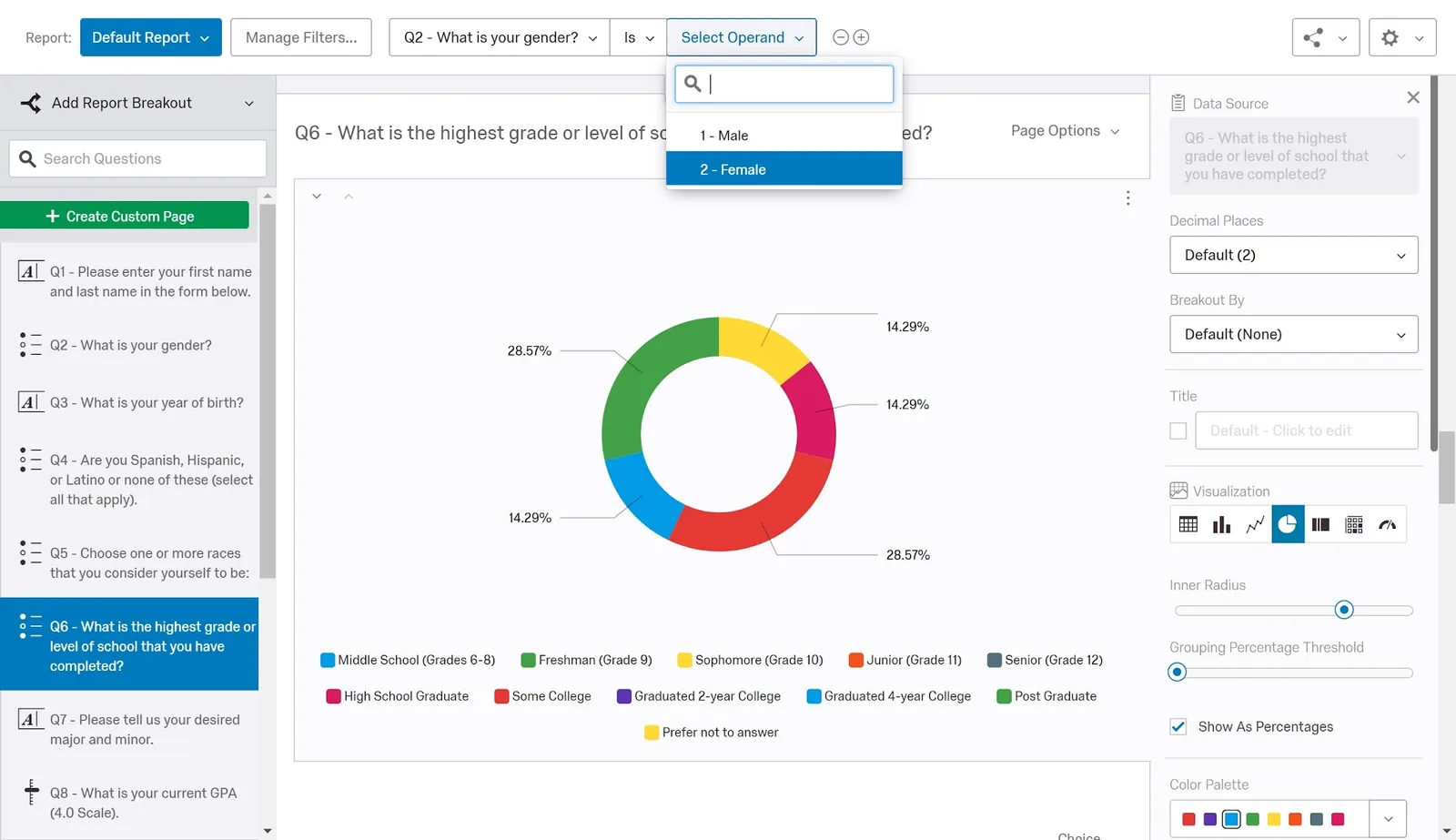
If you are a large enterprise or an organization with complex survey requirements, multi-layered hierarchies, or stringent data security needs, Qualtrics is built to handle listening programs that break smaller HR tools. It doesn't just measure engagement; it models the entire employee lifecycle and connects sentiment data directly to operational metrics.
Some features that help teams act on these insights include
- Employee engagement and pulse surveys
- Employee lifecycle management
- Text analytics
- Customizable dashboards
- Predictive insights
- Action recommendations
What you should keep in mind before buying
All that flexibility comes with a trade-off. While Qualtrics offers guided setups, prebuilt templates, and dashboards, organizations with complex listening programs may need dedicated administrators, internal analysts, or implementation partners to configure survey logic, integrations, permissions, and reporting.
Pricing
- QualtricsXM: Custom quote based on the products, usage, and organizational requirements. Contact Qualtrics for current pricing.
7. Workleap Officevibe: Best for Continuous Team Feedback and Manager Follow-Up
Culture Amp and Qualtrics are often used for structured employee-research programs, including annual engagement studies and quarterly listening cycles. Officevibe is more commonly associated with lightweight, recurring pulse surveys that provide an ongoing view of team sentiment.
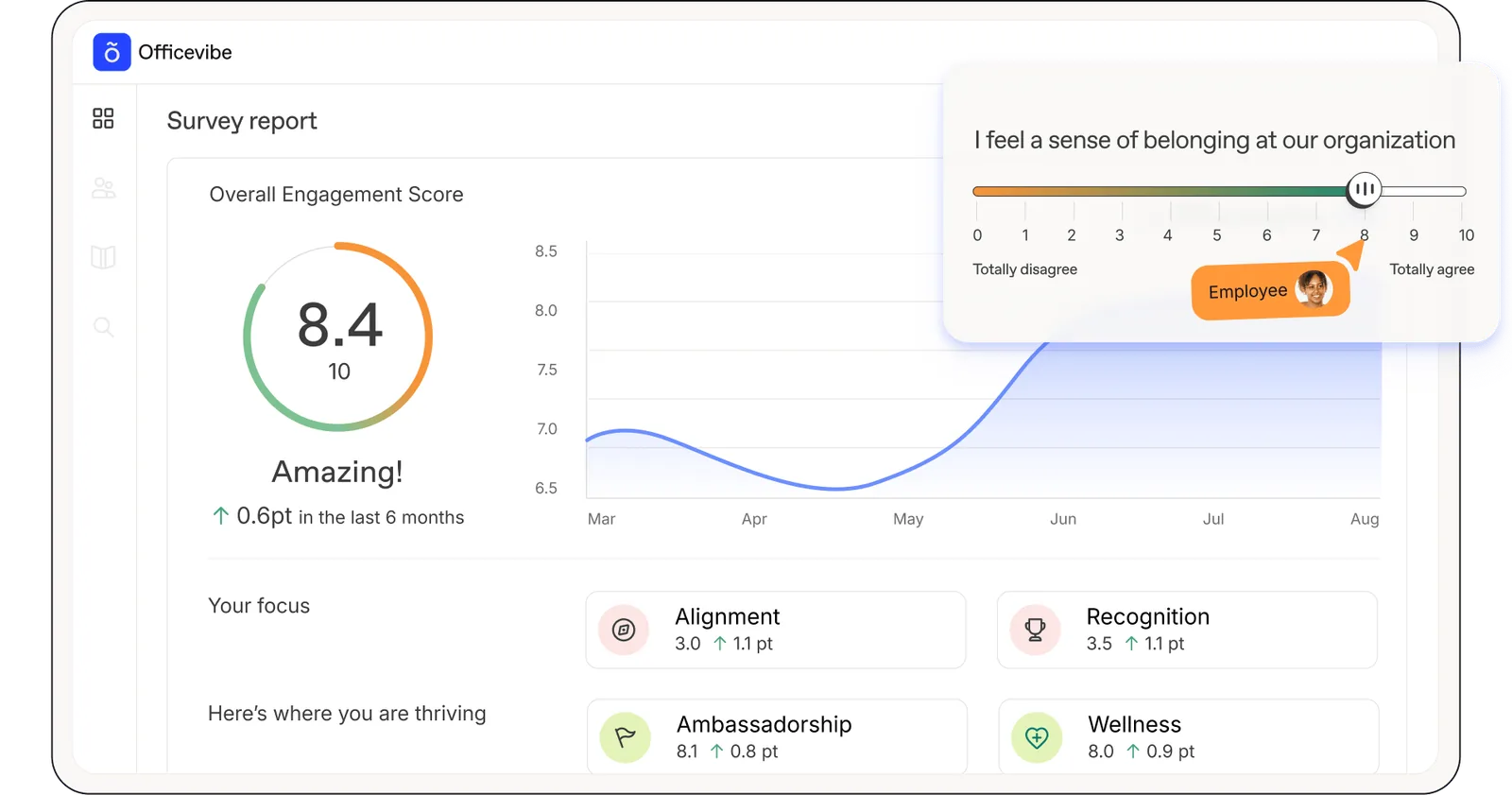
If your core goal isn't producing massive data reports for executive boards, but rather giving frontline managers a lightweight way to check the daily pulse of their teams, Officevibe is built precisely for that operational cadence.
Instead of heavy surveys, Officevibe relies on short, recurring pulse questions that drop into Slack or Microsoft Teams.
The platform includes features designed to help teams act on feedback, including
- Pulse surveys
- Custom surveys
- Anonymous feedback
- Engagement reports
- Feedback responses
What you should keep in mind before buying
Officevibe has specific anonymity thresholds that buyers should understand before rollout. Team-level survey scores require at least three active respondents within the reporting window. Anonymous written feedback becomes visible to managers only when the relevant team or direct-manager reporting group has at least five active members. These safeguards help protect employee privacy, but they can limit the feedback available to managers in very small teams.
Pricing
- Standard: starts at $4,999 USD/year, plus $32 per manager/month.
- Pro: starts at $11,999 USD/year, plus $32 per manager/month.
- Enterprise: custom pricing for organizations with more than 250 employees. All plans are billed Annually.
8. Workday Peakon Employee Voice: Best for Continuous Listening Across Large Organizations
While tools like Officevibe are built for lightweight, team-level check-ins, Peakon (now Workday Peakon Employee Voice) is engineered for enterprise-scale continuous listening.
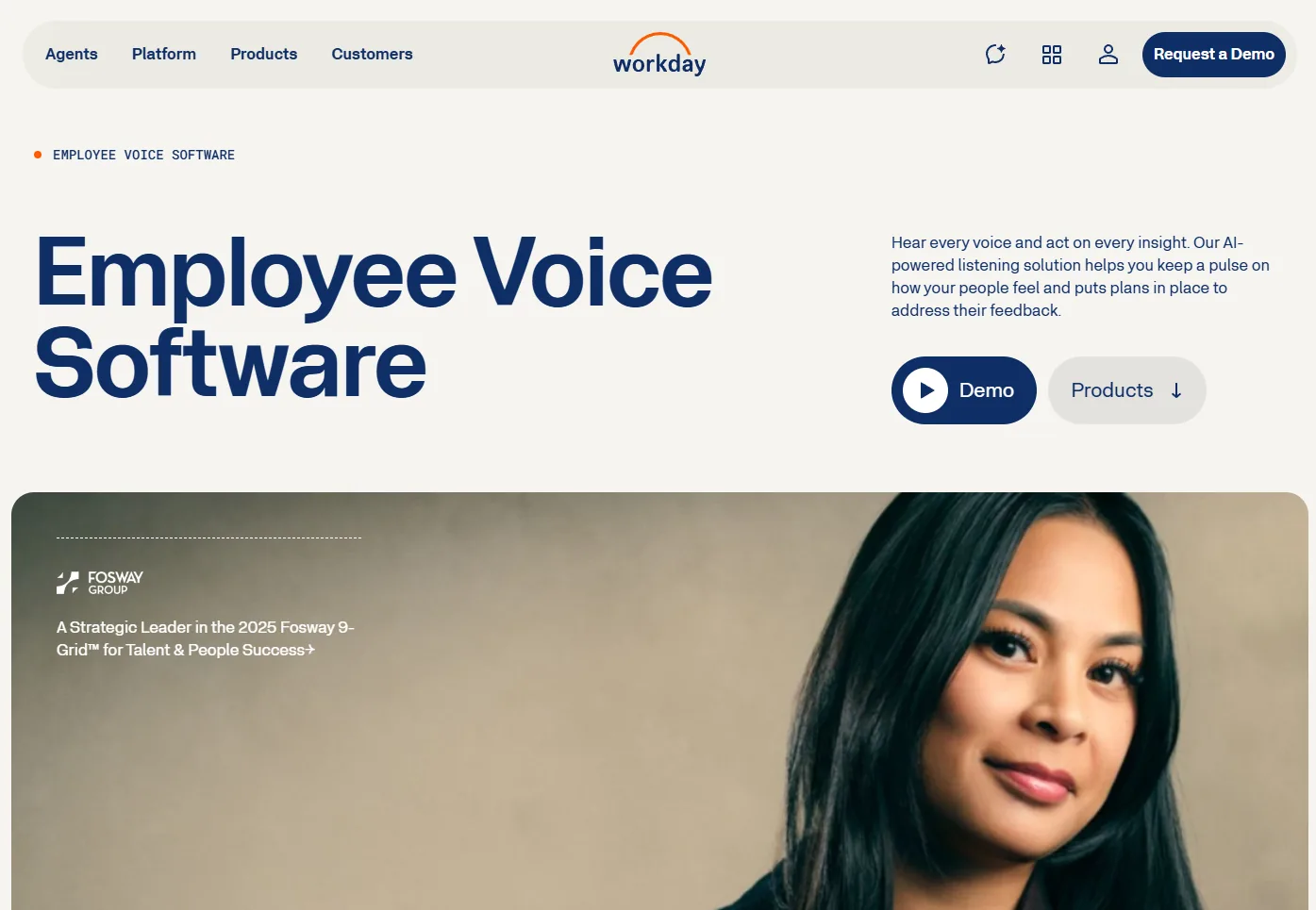
If your organization is large, complex, and already running on Workday, Peakon is the natural listening engine to plug into your HR stack. It moves away from rigid, once-a-year employee surveys in favor of a continuous feedback model, using algorithmic science to track sentiment, predict turnover risk, and surface hidden friction points across thousands of employees.
Here are some key features to look out for
- Continuous listening
- Engagement benchmarks
- Sentiment analysis
- Manager insights
- Action planning
- Communication integrations
What you should keep in mind before buying
Like Qualtrics, Workday describes deployment as taking weeks, so include implementation and integration work when evaluating how quickly you can launch
Pricing
- Workday Peakon Employee Voice: Contact Workday for pricing based on employee count, modules, and Workday deployment requirements.
Top Employee Engagement Tools for Recognition and Rewards
These platforms help organizations make employee appreciation more consistent through peer recognition, manager-led rewards, and milestone celebrations. Look for tools that make recognition easy to give, connect it to company values, and offer rewards employees actually value.
9. Bonusly: Best for Everyday Peer-to-Peer Recognition
While employee engagement and listening tools are designed to surface sentiment and identify issues, recognition tools like Bonusly are built to reinforce everyday appreciation, connection, and morale through frequent peer recognition and rewards.
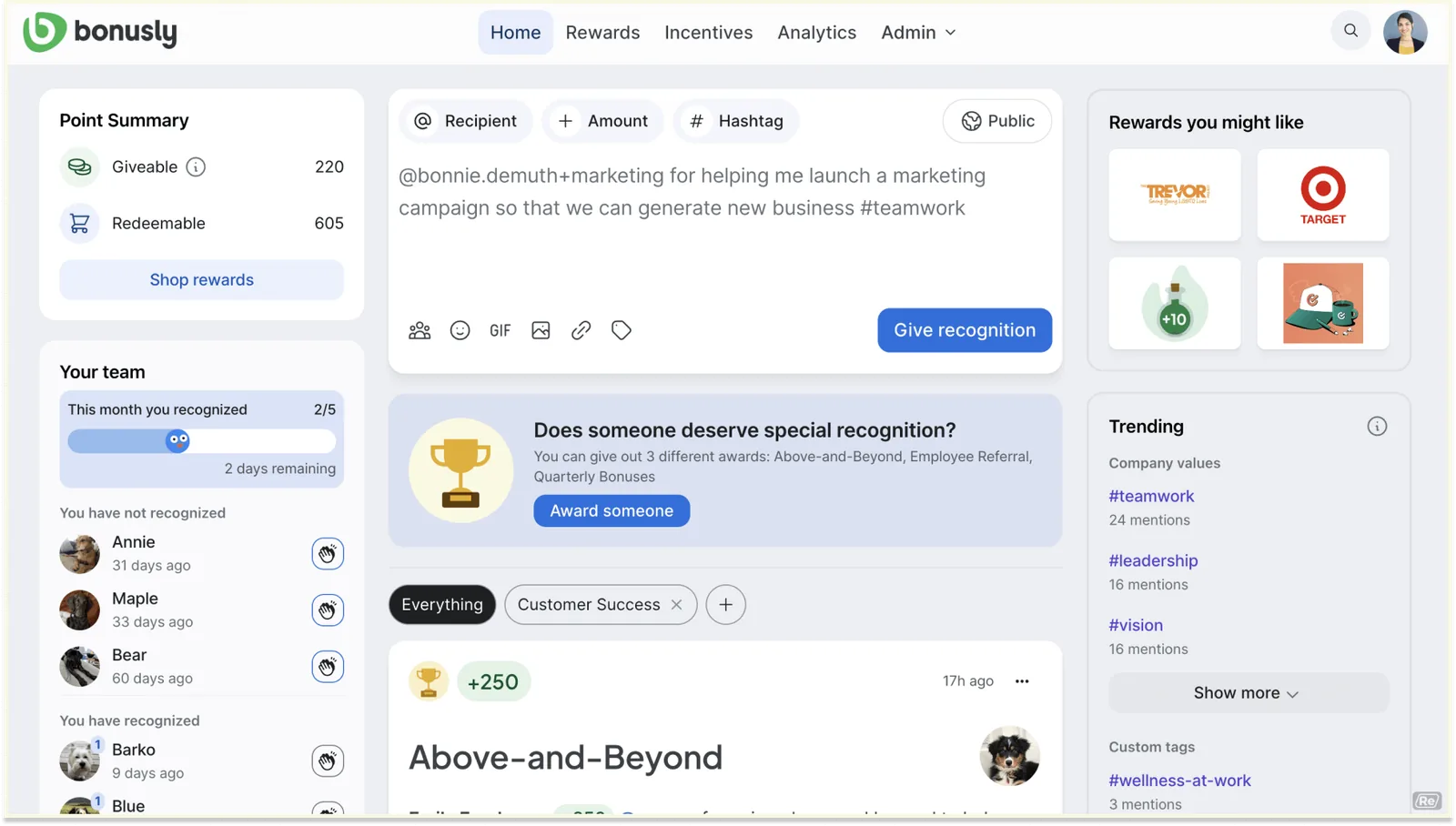
If your company culture feels siloed, or if hard work often goes unnoticed outside of direct reporting lines, Bonusly turns appreciation into a habit rather than an afterthought. Instead of waiting for annual reviews or HR-led awards, it lets employees publicly celebrate each other in real-time.
The features that support this follow-through are
- Peer-to-peer recognition and company values tagging
- Global rewards catalog and automated milestone celebrations
- Communication integrations and participation analytics
What you should keep in mind before buying
Bonusly is relatively straightforward to introduce as a peer-recognition program, but the rewards system needs careful configuration. Point allowances, redemption options, and expiration rules can influence how employees perceive the value of recognition.
Pricing
- Free plan: Available for up to 8 users.
- Team plan: Starts at $3 per user per month without Bizy, or $5 per user per month with Bizy, when billed annually.
- Organization plan: Custom pricing.
10. Nectar: Best for Values-Based Recognition With Flexible Rewards
While Bonusly excels at lightweight, everyday peer shout-outs, Nectar is built for organizations that need a bit more operational structure behind their rewards program.
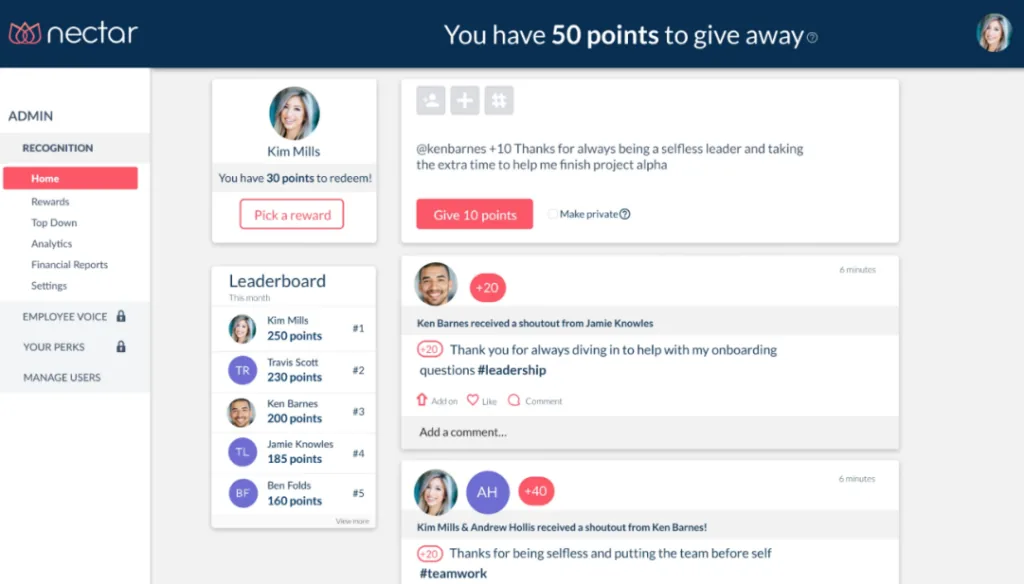
If you want to move away from informal, ad-hoc appreciation and need tighter administrative control over budgets, cross-departmental alignment, and HRIS integrations, Nectar hits a sweet spot between flexibility and enterprise governance.
Beyond standard peer-to-peer shout-outs tied to company core values, Nectar lets you run structured nomination programs, quarterly challenge campaigns, and automated milestone celebrations.
The features that support this follow-through are
- Values-based shout-outs and structured challenges
- Granular budget management and cost-center tracking
- HRIS integrations and communication connectors
What you should keep in mind before buying
While Nectar’s rewards catalog is broad, buyers with distributed international teams should verify the available gift-card options, local fulfillment coverage, currency support, and tax implications for each employee region before rollout.
Pricing
- Custom quote. Nectar prices per employee per month,
- Separate packages for recognition, communications, engagement, and its Culture Suite.
11. Achievers: Best for Global Recognition Programs
Achievers is designed for organizations that want to make employee recognition a consistent part of their workplace culture across teams, departments, and countries. Employees can recognize colleagues, connect appreciation to company values, and earn points they can redeem through a global rewards marketplace.
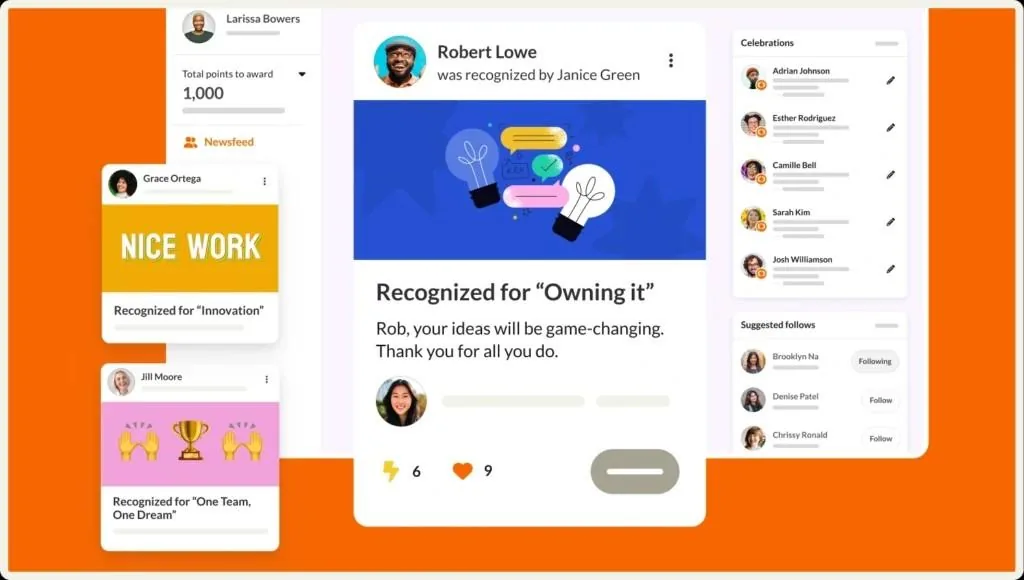
If your company operates across multiple countries, languages, and compliance jurisdictions, and you need a recognition program that can scale smoothly from North America to Europe and APAC. Achievers is engineered specifically for that level of complexity.
Here are some key features that make these achievable
- Global rewards marketplace and localized fulfillment
- Formal awards and automated milestone management
- Enterprise reporting and multi-channel access
What you should keep in mind before buying
Achievers is an enterprise-oriented recognition platform with custom, sales-led pricing and structured implementation support. It is generally best suited to organizations with roughly 500 or more employees, where its global rewards, HRIS integrations, and dedicated customer-success model can justify the investment; smaller teams may find a lighter-weight, self-serve alternative more cost-effective.
Pricing
- Custom quote.
- Pricing is tailored to company size, selected modules, and program goals; no annual points commitment is required.
12. WorkTango: Best for Structured Recognition and Rewards Programs
If you want the flexibility to run recognition programs with or without financial incentives, WorkTango approaches employee appreciation through a modular, highly customizable lens.
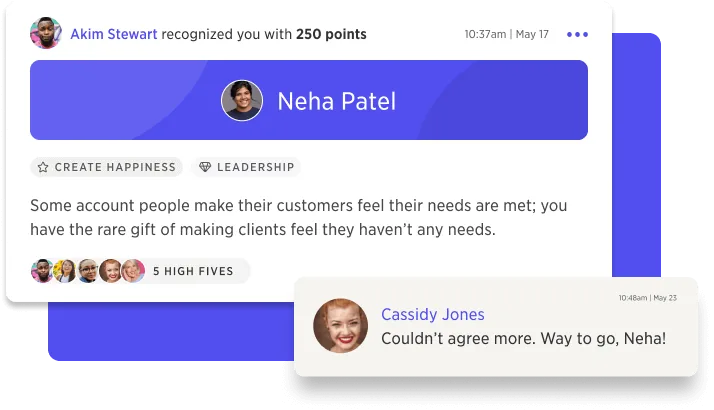
Unlike platforms that lock you strictly into point systems, WorkTango lets HR teams design recognition programs that match specific cultural values and budget constraints. That can mean pure peer shout-outs, formal management-led awards, or structured wellness incentives.
Here are the features I’d focus on
- Flexible point-based and points-free recognition
- Structured company awards and wellness incentives
- Budget tracking and administrative reporting
What you should keep in mind before buying
WorkTango can suit organizations that want recognition and rewards to operate as a structured program rather than a collection of informal shout-outs. However, the range of features may require thoughtful configuration, especially when different departments or locations have separate budgets and recognition policies.
Pricing
- Contact WorkTango for pricing based on workforce size and selected survey, recognition, and rewards capabilities.
Top Employee Engagement Tools for Communication and Connection
When employees work across different locations, shifts, or time zones, important updates can easily get missed. These platforms help organizations keep people informed and connected through company announcements, employee communities, and, in some cases, operational tools for frontline teams.
13. Workvivo: Best for Internal Communication and Workplace Connection
If company updates mostly travel through email or a traditional intranet, employees can easily miss them or have little opportunity to respond. Workvivo takes a more social approach, combining an employee communication platform with a social intranet where people can follow company news, recognize colleagues, and interact across teams.
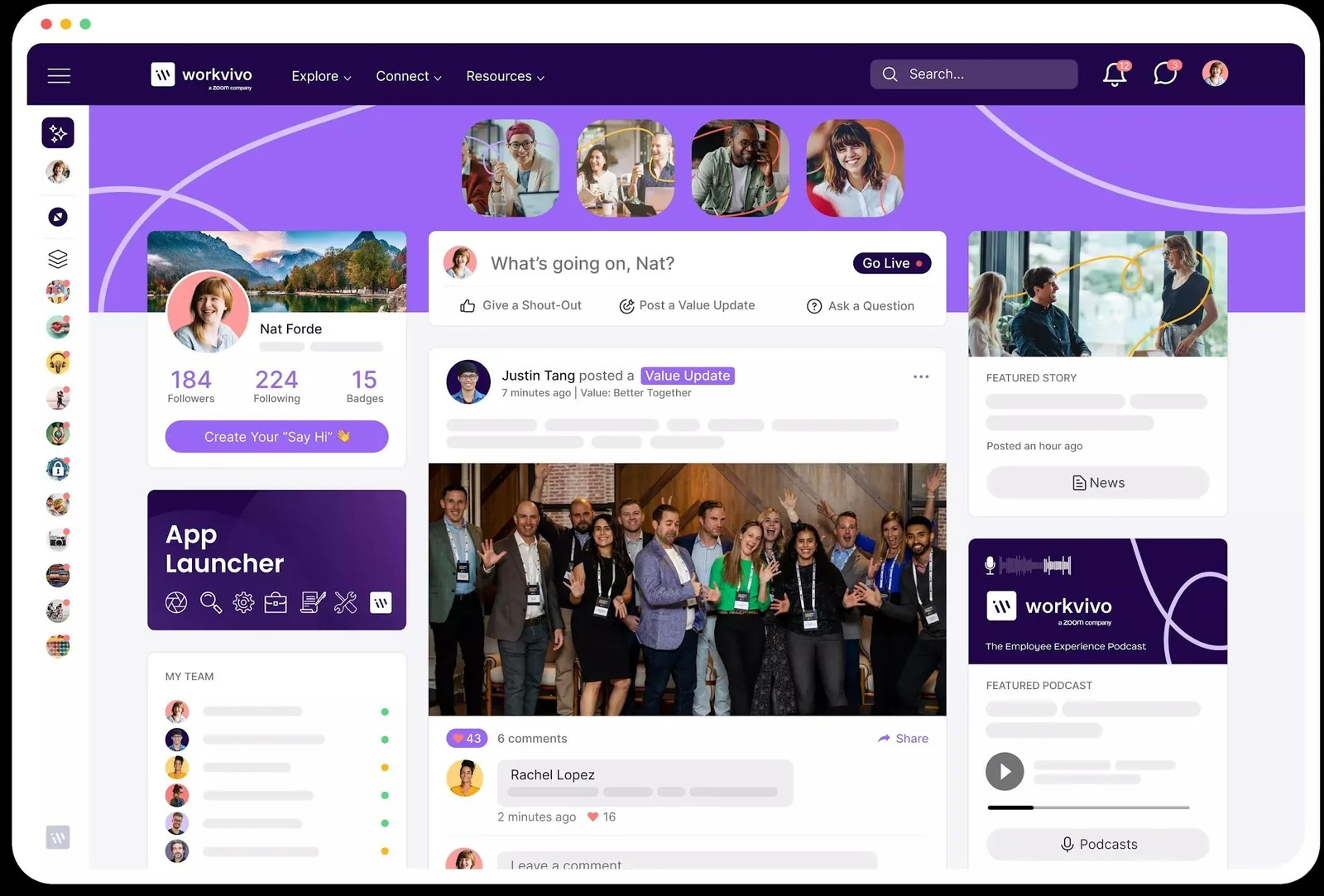
Its social-style feed lets people comment on company news, share updates, recognize coworkers, and join communities based on their departments, locations, projects, or interests. Instead of communication flowing only from leadership to employees, people across the organization can take part in the conversation.
This is particularly useful if you have distributed or frontline teams who don't spend their day at a desk.
Here are the key features I'd look out for
- Social activity feeds and community spaces
- Multichannel delivery (Livestreams, Digital Signage, and Mobile)
- Engagement analytics and feedback polls
What you should keep in mind before buying
Because its activity feed brings together company, team, space, and employee-generated content, poor content organization or excessive posting can make important updates harder to find. Organizations should establish clear content and communication-governance practices, while employees can manage their own email, push, and space-subscription notification preferences.
Pricing
- Custom quote. Pricing depends on the number of licenses and the organization’s specific needs.
14. Connecteam: Best for Mobile Communication With Frontline and Deskless Teams
While Workvivo is built to function as a social intranet and culture hub for corporate and hybrid teams, Connecteam approaches communication from a completely different angle: operational execution for deskless and frontline workforces.
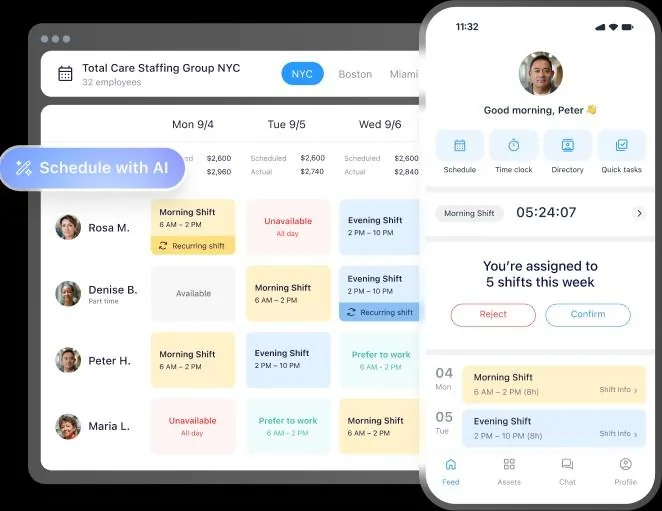
If your team doesn't sit behind a desk, like construction crews, retail staff, healthcare workers, or hospitality teams, they aren’t opening a laptop to check company updates or read a social feed. So relying on standard intranet tools means your updates might easily be missed.
Connecteam solves this by packaging internal communication directly alongside the operational tools your team uses every single day, like shift scheduling, time tracking, and task checklists.
Here are some other features designed to help your teams communicate better
- Mobile-first team chat and announcement acknowledgments
- Integrated workforce management tools
- Centralized knowledge base and employee directory
What you should keep in mind before buying
Organizations seeking advanced engagement analytics, continuous employee listening, or a more sophisticated internal social network may need a dedicated platform alongside it..
Pricing
- Free Small Business plan available.
- Basic: $29/month annually
- Advanced: $49/month annually or $59/month monthly for 30 users
- Expert: $99/month annually or $119/month monthly for 30 users
Top Employee Engagement Tools for Broader People Management
If you want to manage engagement alongside performance, development, and other HR processes, a broader people platform may be a better fit than a standalone tool. These platforms bring several workflows together, but the depth of their survey and feedback features can vary.
15. Deel Engage: Best for Connecting Engagement With Performance and Development
As I noted in the broader platform intro, relying on separate engagement apps alongside standalone HR tools can create administrative overhead. While Lattice and Leapsome address this by offering comprehensive talent-management suites, Deel Engage takes a different approach: it embeds engagement, performance, and development directly into Deel’s global HR, payroll, and compliance platform.
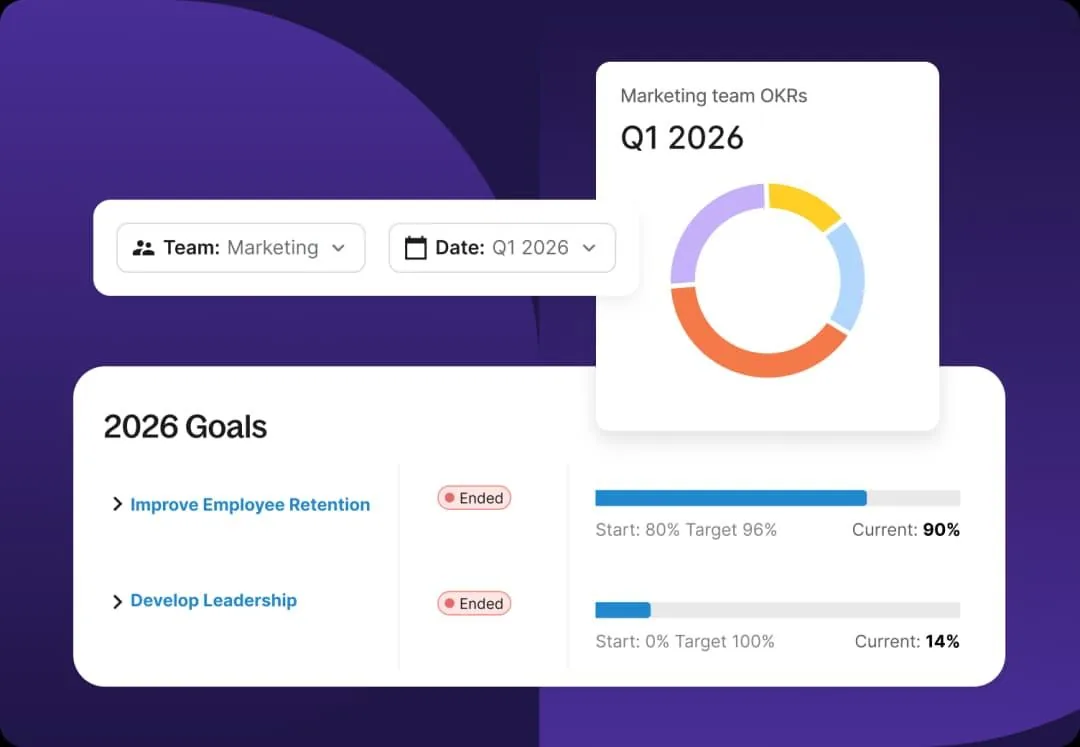
If your biggest headache isn't just managing reviews, but managing international employees and contractors scattered across dozens of countries, Deel solves a massive logistical problem. Instead of forcing you to spin up yet another point solution for pulse surveys and performance tracking, Deel Engage lets you plug employee listening, 360-degree reviews, and career development frameworks straight into the same platform where your global team is already onboarded and paid.
The features that support this follow-through are
- Engagement surveys and sentiment tracking
- Performance reviews and goal alignment (OKRs)
- Global workforce infrastructure
What you should keep in mind before buying
Engage is sold only as an all-in-one bundle that includes surveys, reviews, goals, learning, development plans, and career management. If you are not using Deel for workforce management, evaluate whether that broader bundle fits your needs before choosing it over a dedicated engagement platform such as Culture Amp or Lattice.
Pricing
- HR Core: Starts with a free HR Core tier for basic HR management.
- Talent: Priced separately for hiring and managing talent.
- Contractors: Pricing scales based on contractor-management needs.
How to Put an Employee Engagement Tool to Work
An employee engagement tool can help you identify workplace issues, but improvement depends on how you respond. These six steps can help you turn feedback into action.
Set a Clear Objective
Decide what you want to improve before launching surveys or recognition programs. If employees report low confidence in leadership, for example, focus your questions on communication, trust, and decision-making.
Choose Who Will Participate
Decide whether feedback or recognition initiatives should involve the entire organization or specific teams and locations. Consider how employees will access the platform, too. Frontline workers may need mobile access, while desk-based teams can use Slack, Microsoft Teams, or a desktop dashboard.
Explain How Feedback Will Be Used
Tell employees what you're collecting, who can access their responses, and how the organization will use the findings. Be clear about survey frequency and whether responses are anonymous or confidential. If anonymity depends on minimum response thresholds, explain that upfront.
Identify Recurring Issues
Look for patterns across teams and over time instead of reacting to individual comments. If several teams report unclear priorities, investigate whether the cause is poor communication, changing workloads, or conflicting expectations.
Assign Responsibility for Action
Give managers or HR teams ownership of specific improvements. For example, unclear team communication might require regular manager updates, while inconsistent recognition could call for a peer-recognition program. Keep action plans realistic and assign clear responsibilities.
Communicate Progress
Share what you've learned, what will change, and what cannot be addressed immediately. Use follow-up surveys and manager conversations to assess progress, but look beyond engagement scores to see whether the original problems have improved.
Ultimately, the goal is to make sure employees are heard and the organization follows through.
Frequently Asked Questions About Employee Engagement Tools
How do I choose the right employee engagement software?
Start by identifying the problem you want to address. If you need to measure employee sentiment, look for survey tools with reliable reporting, benchmarking, and confidentiality controls. If recognition is the priority, evaluate platforms that make peer appreciation and rewards easy to manage.
You should also consider your workforce structure, integrations, reporting requirements, ease of use, and budget.
What's the difference between an employee engagement tool and an employee survey tool?
An employee survey tool primarily helps organizations collect feedback through questionnaires, pulse checks, and other listening methods.
An employee engagement platform may include surveys, but it often goes further by adding recognition, communication, performance feedback, analytics, and action-planning features.
Can employee engagement software improve employee retention?
Employee engagement software can help organizations identify workplace concerns that may contribute to employees considering leaving, such as poor management, limited development opportunities, or low recognition.
However, collecting feedback doesn't automatically improve retention. Organizations need to investigate the issues employees raise and make changes where possible.
Are employee engagement surveys anonymous?
Not always. Some platforms support anonymous surveys, while others offer confidential feedback or configurable anonymity settings.
Even tools that support anonymous responses may apply minimum response thresholds before displaying results. These rules help prevent employees from being identified in small teams.
Choose an Employee Engagement Tool That Leads to Action
The right employee engagement tool depends on what you want to improve, whether that's employee feedback, recognition, communication, or leadership.
For organizations focused on improving leadership quality, Teamspective connects company values, strategy, and leadership principles with everyday management. Its Leadership Enablement Agent, Lea, helps managers prepare for 1:1s, understand employee feedback, guide conversations, and follow through on actions.
Book a demo
See how Teamspective helps managers turn employee insights into better leadership practices.
Book a demo


