
15 Best Employee Survey Tools to Collect Feedback and Improve Workplace Engagement
November 13, 2026 by Jose Kantola
AI summary
- Choose a tool based on how you plan to use employee feedback. Some platforms focus on recurring pulse surveys, while others support broader engagement programs, lifecycle surveys, advanced analytics, and manager follow-up.
- Consider Teamspective for connecting employee feedback with leadership development. It combines employee engagement, performance, and collaboration capabilities, with Lea providing practical support to managers and helping them understand what needs attention.
- Look beyond survey creation. Reporting, trend analysis, comment analysis, and action-planning capabilities determine how easily HR teams and managers can turn employee responses into improvements.
Disclosure: This guide is published by Teamspective. We’ve included our platform alongside competitors and evaluated each against the same criteria. Descriptions are based on publicly available product information, vendor documentation, and pricing as of November 2026.
Choosing an employee survey tool involves more than finding software that creates questionnaires and collects responses. HR teams need to understand what employees are saying, identify workplace issues, and help managers decide what to improve. Yet many organizations struggle with that last step.
Perceptyx's 2026 State of Employee Listening report highlights the gap: 71% of employees say their organization shares survey results, 59% say action plans are created, but only 51% report seeing actual improvements. This suggests that communicating findings and creating action plans aren't enough. Organizations also need the people, processes, and tools to follow through.
We compare 15 employee survey tools to help you evaluate their survey capabilities, reporting and analytics, action-planning features, pricing, and limitations. You'll see which platforms suit different listening needs and which go beyond collecting feedback to help managers turn employee insights into meaningful improvements.
What Are Employee Survey Tools?
Employee survey tools collect and analyze feedback about employees’ experiences at work. Organizations use them for engagement, satisfaction, onboarding, exit, and other surveys. These categories can overlap: engagement and satisfaction describe what a survey measures, while pulse describes a short, recurring survey format. For example, a monthly pulse can track engagement between broader annual surveys.
2026 comparison: Best employee survey tools by their use case
| Employee Survey Tool | Best For | Relevant Survey Capabilities | Pricing |
|---|---|---|---|
| Teamspective | Connecting employee feedback with leadership development | Custom engagement surveys, analytics, and personalized recommendations for leaders. | Starting at EUR 5.50 per seat/month; Enterprise: custom quote. |
| Eletive | Adaptive pulse surveys and employee lifecycle feedback | Intelligent pulse surveys, engagement surveys, onboarding and exit surveys, and customized questions. | Eletive offers Essential, Standard, and Professional plans. |
| Deel Engage | Managing employee surveys alongside broader people operations | Employee engagement surveys, pulse surveys, anonymous feedback, and talent management platform. | Starts with a free HR core tier and scales up depending on program goals |
| Lattice | Combining engagement surveys with performance management | Pulse surveys, engagement assessments, onboarding and exit surveys, eNPS, and action planning. | Engagement: US$4 per seat/month; annual billing. |
| Leapsome | Survey analytics and post-survey action planning | Engagement surveys, customizable question libraries, analytics, filters, benchmarking, and action plans. | Engagement: €4 per employee/month, plus platform. |
| Workleap Officevibe | Ongoing team feedback and manager responses | Recurring pulse surveys, personalized questions, team feedback, and manager responses. | Standard: US$4,999/year + US$32 per manager/month. |
| Qualtrics | Complex employee listening and experience programs | Engagement and pulse surveys, continuous listening, and employee experience analytics. | Custom quote. XM for Employee Experience pricing. |
| SurveySparrow | Conversational survey design and recurring feedback collection | Conversational surveys, customizable questionnaires, and multiple distribution options. | Custom quote. |
| Culture Amp | Research-backed engagement surveys and benchmarking | Engagement survey frameworks, employee feedback, benchmarking, and insights to support action planning. | Custom quote; annual billing |
| 15Five | Measuring engagement alongside manager effectiveness | Engagement surveys, heat maps, benchmarking, lifecycle surveys, and action planning. | Engage: US$4; Total Platform: US$16 per user/month. |
| Quantum Workplace | Engagement reporting and identifying improvement priorities | Engagement surveys, pulse surveys, survey item analysis, and action planning. | Custom quote. |
| WorkTango | Combining employee surveys with recognition and rewards | Unlimited surveys, eNPS, customizable dashboards, survey templates, and people analytics. | Custom quote. |
| Workday Peakon Employee Voice | Continuous employee listening and workforce insights | Recurring engagement surveys, employee sentiment tracking, benchmarking, lifecycle feedback, and action planning. | Contact Workday for pricing. |
| Microsoft Viva Glint | Organization-wide employee listening in Microsoft environments | Customizable engagement, onboarding, exit, and other employee experience surveys, with actionable recommendations. | Microsoft Viva Glint: $2 per, Viva Workplace Analytics and Employee Feedback plan: $6 per user. |
| SurveyMonkey | Flexible employee surveys and broader feedback programs | Customizable surveys, survey templates, and employee engagement surveys. | Team Advantage: US$30 per user, Responses: 50,000 per year included. |
How to choose an employee survey tool
The right employee survey tool depends on what you want to measure, how you plan to collect feedback, and what you'll do with the results. A small company running occasional satisfaction surveys has different requirements from a multinational organization managing continuous employee listening.
Feedback Needs and Survey Customization
Start with the feedback you need. Are you measuring engagement, collecting onboarding feedback, assessing workplace satisfaction, or monitoring employee experiences during organizational changes?
Look for a platform with relevant survey templates, customizable questions, and support for the survey types you plan to use. Features such as conditional logic, multiple response formats, and multilingual surveys also matter if you need to reach different employee groups.
Survey Approach, Cadence, and Delivery
Consider whether you need comprehensive annual surveys, shorter recurring pulse surveys, or both. Your platform should support the frequency and distribution methods that suit your workforce.
Check for automated scheduling, reminders, mobile-friendly surveys, and delivery through channels such as email, Slack, or Microsoft Teams.
Reporting, Analytics, and Segmentation
Look beyond basic response counts and average scores. A useful platform should help HR teams identify patterns, compare results over time, and understand differences between employee groups.
Depending on your needs, prioritize features such as trend analysis, demographic filters, heatmaps, external benchmarks, and open-ended comment analysis.
Action Planning and Follow-Through
Survey results are only useful when someone can act on them. Check whether managers can access relevant team insights, identify priorities, assign responsibilities, and track improvements.
Confidentiality, Integrations, and Organization Size
Employees need to trust that their feedback won't expose them to retaliation or unwanted scrutiny. Understand how each platform handles anonymous and confidential responses, access permissions, data security, and minimum reporting thresholds.
Integrations also affect how easily the platform fits into your existing workflows. Check compatibility with your HRIS, such as BambooHR, Personio, HiBob, or Workday, and communication tools such as Slack and Microsoft Teams.
Pricing, Plans, and Total Cost
Employee survey software may be priced per employee, per user, or through custom annual contracts. Some vendors also charge separately for advanced analytics, benchmarking, integrations, or additional modules.
Compare the full cost rather than the advertised subscription price. Ask about minimum seat requirements, implementation fees, contract terms, and which features are included in each plan.
In-depth review of the best employee survey tools in 2026
1. Teamspective
Best for: Organizations that want to connect employee feedback with leadership development and help managers turn engagement insights into practical improvements.
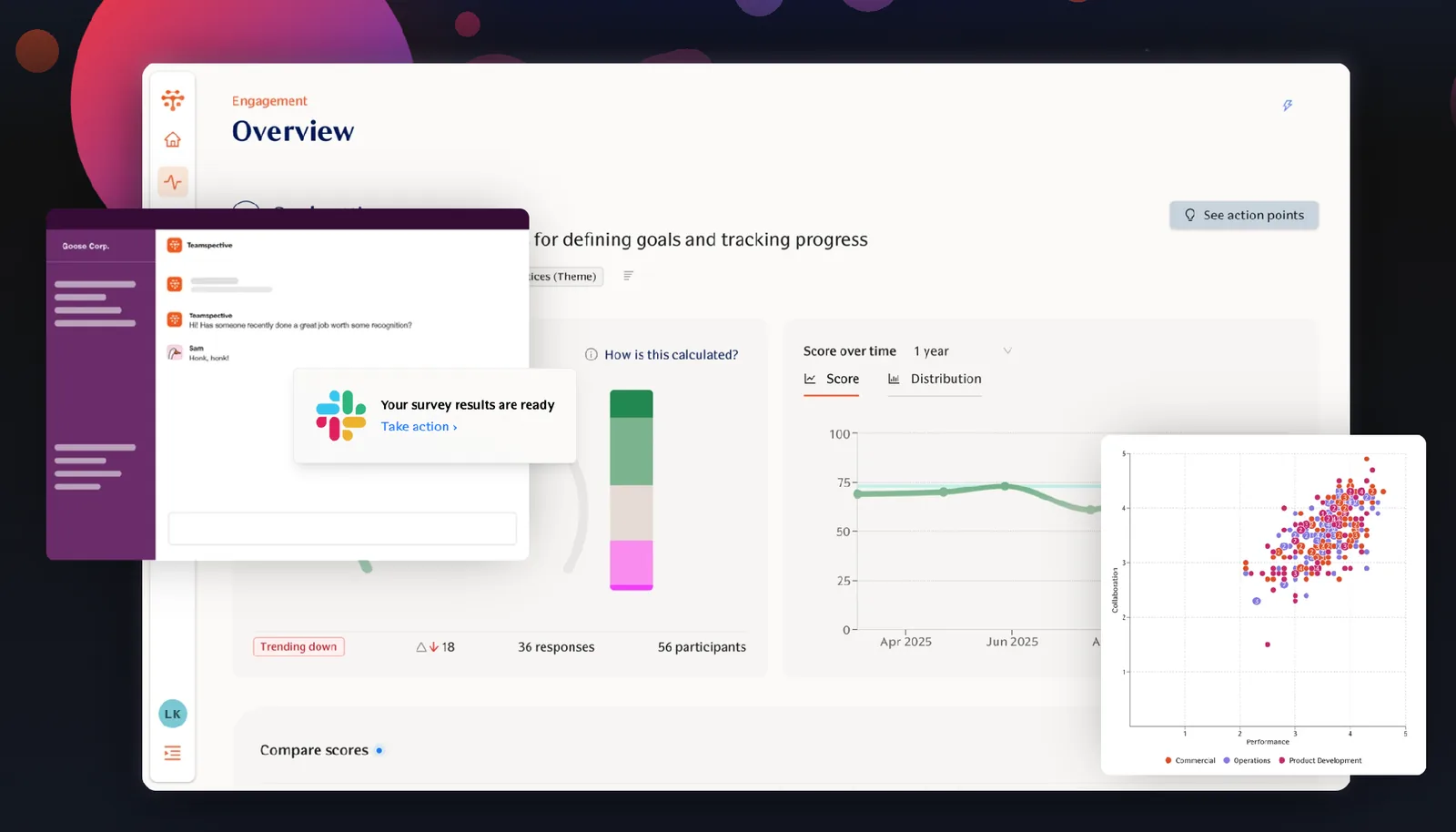
What it does: Employee surveys can reveal engagement problems, but scores alone don't explain how those issues relate to company priorities or what managers should change. Teamspective takes a broader approach to employee surveys. Instead of focusing only on collecting feedback and reporting engagement scores, it connects employee engagement, performance, and collaboration with the way managers lead their teams.
Why consider Teamspective?
If your main priority is building questionnaires and analyzing responses, a dedicated survey platform may be enough. But if you also want managers to use employee feedback to improve how they lead, Teamspective is worth a closer look.
Three aspects make this approach particularly relevant.
1. Connect employee feedback with your leadership principles
A common challenge with engagement surveys is that they measure employee experiences without necessarily connecting the findings to how the organization expects its managers to lead.
Teamspective lets you build surveys around your company's strategy, values, and leadership principles. This gives HR teams a way to understand whether those principles are reflected in employees' everyday experiences.
For example, if collaboration is one of your company's core values, you can gather feedback on how well teams share information, resolve disagreements, and work across departments.
You can use this approach to
- Customize feedback: Create questions around the workplace experiences and leadership behaviors that matter to your organization.
- Set consistent expectations: Connect feedback with company-specific leadership principles and competencies.
- Identify areas for support: Use team-level insights to see where managers may need guidance or development.
2. Give managers practical support through Lea
Survey reports can show where a team is struggling, but they don't automatically help its manager address the problem. HR teams can share findings and recommend next steps, yet managers still need to prepare conversations and make time to follow through.
That's where Lea, Teamspective's Leadership Enablement Agent, comes in. Every manager gets Lea, which uses relevant employee feedback, performance information, and company-specific leadership context to support everyday management.
Say survey responses point to concerns about workload or communication. A manager can use Lea to prepare questions for a team discussion, organize the meeting, record agreed actions, and revisit those commitments later.
Lea can help managers with
- Conversation preparation: Bring relevant feedback, work priorities, and previous commitments into meeting agendas.
- Meeting coordination: Create discussions and schedule calendar events.
- Follow-through: Record notes, save agreed actions, and bring previous commitments into subsequent conversations.
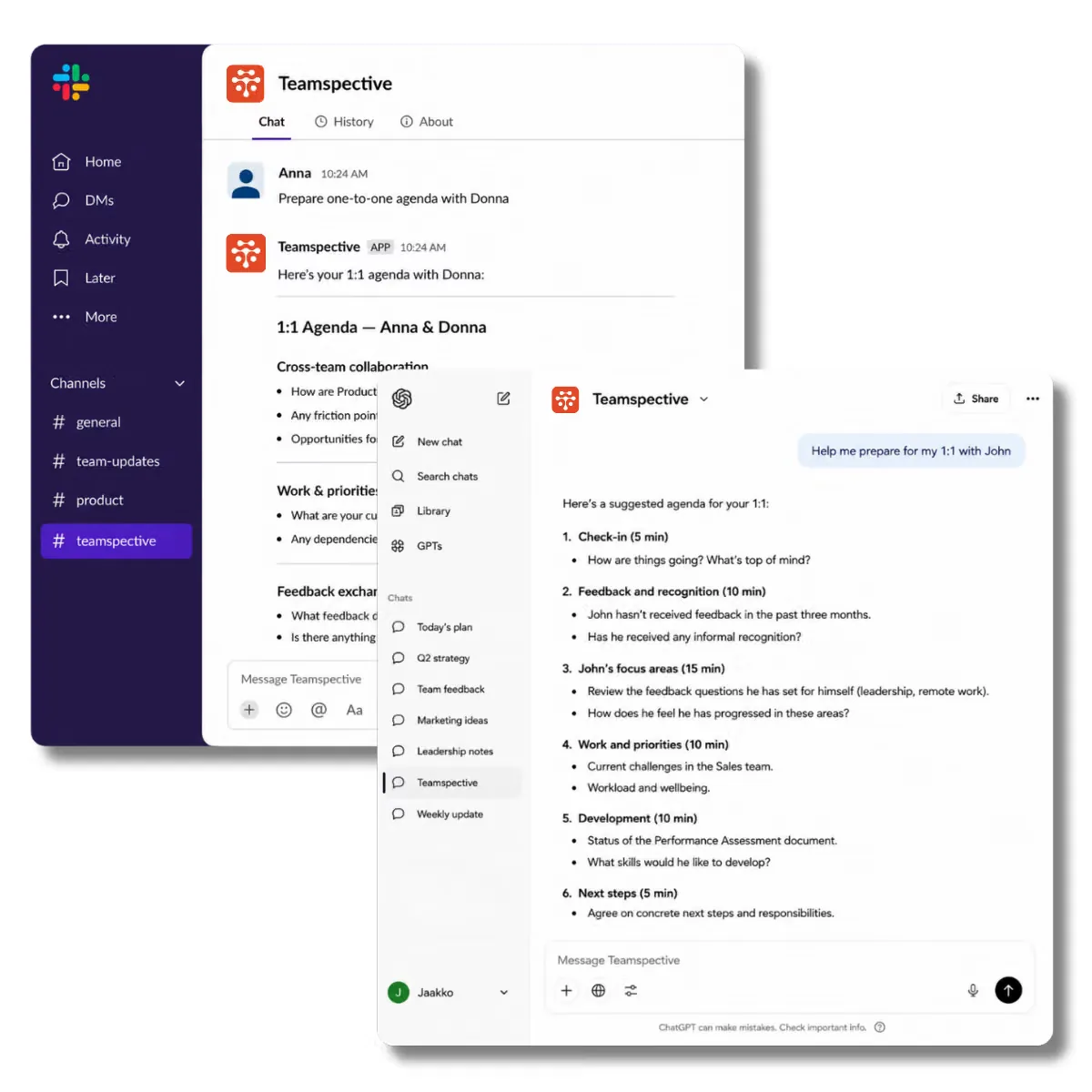
This is an important distinction. Teamspective doesn't just give managers access to engagement results. It gives them practical support for responding to those results, helping HR move some of the follow-up into managers' everyday workflows.
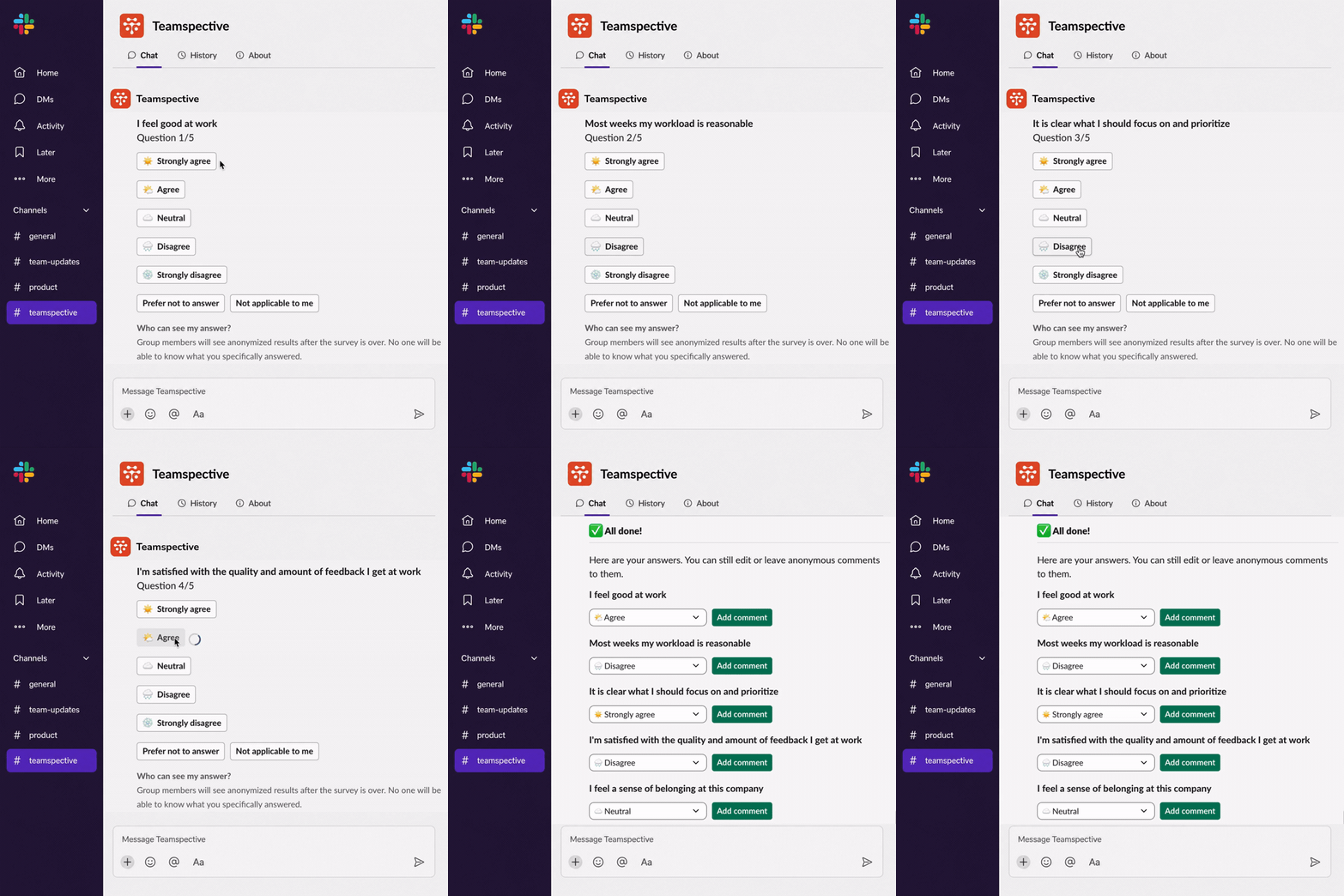
3. Collect feedback through Slack and Microsoft Teams
If your employees already spend much of their working day in Slack or Microsoft Teams, asking them to open another application can add friction to the survey process.
Teamspective lets employees receive and complete surveys directly through these communication tools. For example, you can send a five-question pulse survey through Slack and collect responses without asking employees to navigate to a separate survey platform.
Limitations and considerations
Teamspective doesn't offer standalone goal-setting or OKR features. If you need a dedicated platform to set and track company or individual goals, you'll need a separate tool for that.
Pricing
- Standard: starting at EUR 5.50 per seat/month, up to 300 seats. Price scales with the modules you select.
- Enterprise: custom quote for 300+ seats.
- Free trial: 14 days for up to 20 seats, all core modules, no credit card required.
Want to improve leadership quality across your organization?
Book a Teamspective demo to see how Lea helps managers turn employee insights into better everyday leadership practices.
Book a Teamspective demo2. Eletive
Best for: Organizations that want pulse surveys to adapt to employee responses and gather feedback throughout the employee lifecycle.
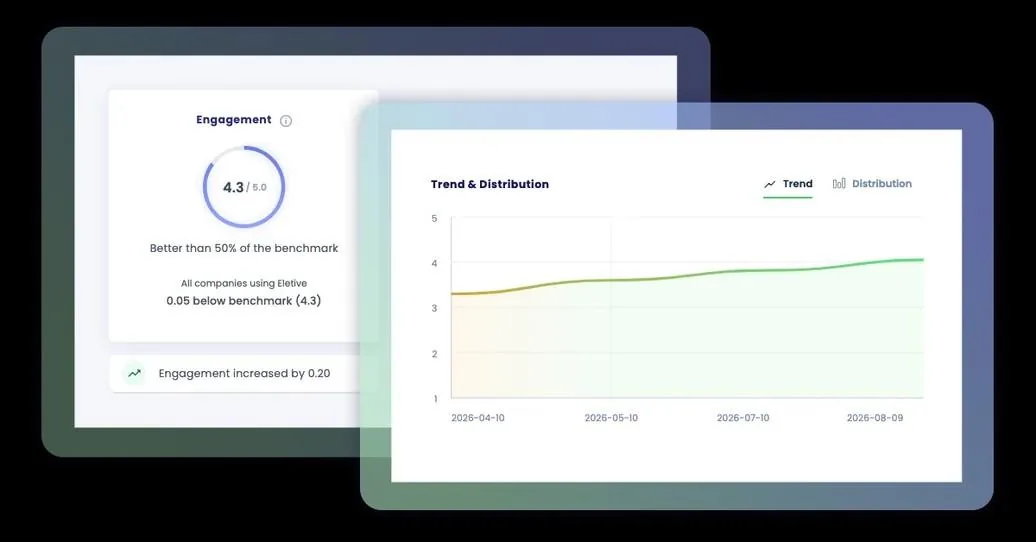
What it does: Eletive combines employee engagement and performance management with continuous employee listening. Its intelligent pulse surveys help organizations track engagement over time, while dedicated onboarding and exit surveys capture feedback at important stages of the employee journey.
Why consider Eletive?
Most pulse surveys follow a set schedule and ask employees a predetermined set of questions. Eletive takes a different approach: its algorithm rotates questions based on previous responses and how recently employees answered them.
For example, if someone reports a poor relationship with their manager, Eletive can prioritize a related follow-up question in a subsequent survey. That gives you a way to explore a potential problem without repeatedly asking every employee the same questions.
Other capabilities that support the approach are
- Lifecycle surveys
- Flexible scheduling
- Survey analytics
- Custom surveys
Limitations and considerations
Eletive's adaptive question rotation may not suit every survey program. If you need all employees to answer the same questions for consistent comparisons across teams or survey cycles, check how much control you have over question selection.
Pricing
- Offers custom quotes for Essential, Standard, and Professional plans, but does not publish fixed subscription prices.
- Organizations need to contact its sales team for a quote.
3. Deel Engage
Best for: Organizations that want to manage employee surveys alongside performance reviews, learning, and career development.
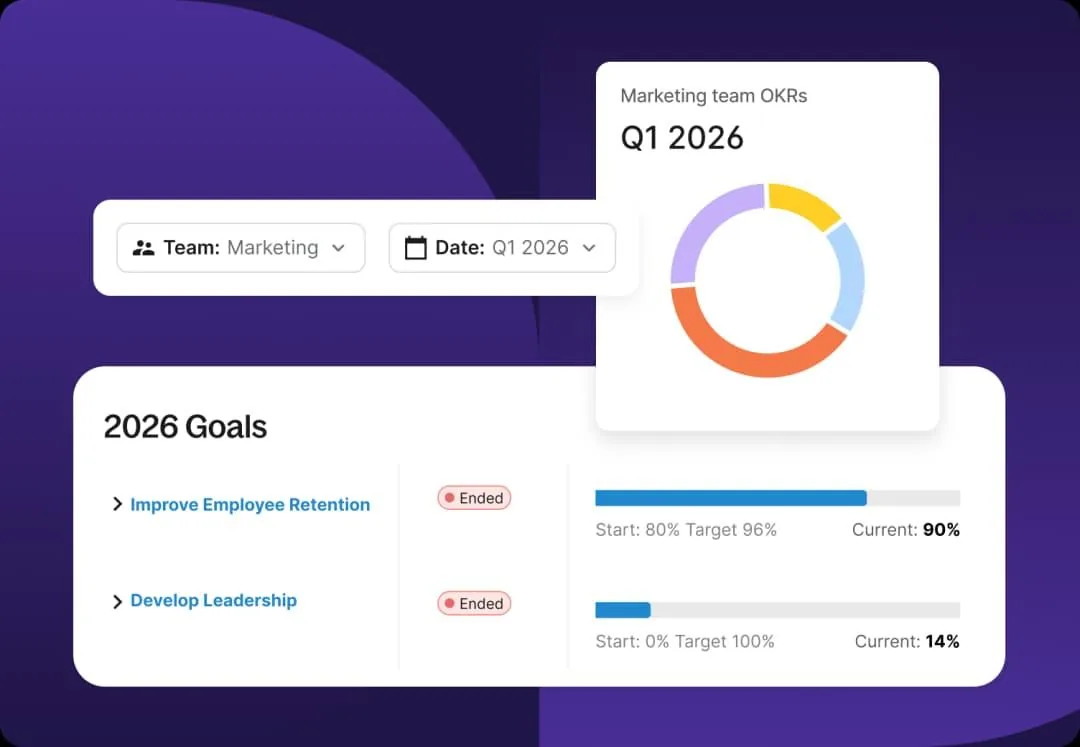
What it does: Deel Engage brings employee surveys into a broader talent management platform. You can run engagement surveys, pulse surveys, and custom questionnaires alongside performance reviews, goals, learning, and employee development.
Why consider Deel Engage?
Eletive focuses on adapting pulse survey questions to uncover changes in employee sentiment. Deel takes a broader approach: it connects feedback collection with the other processes HR teams use to manage and develop employees.
For example, you can create a survey for a specific department, schedule its distribution, and configure response privacy. HR teams can then review engagement drivers, eNPS, and employee sentiment through centralized dashboards.
Other relevant capabilities include
- Targeted surveys
- Anonymous feedback
- Survey reminders
- Connected talent workflows
This setup makes sense if you already use Deel or want one platform for several people management processes. For employee listening alone, a specialist such as Eletive may be a better fit.
Limitations and considerations
Deel Engage is sold as an all-in-one bundle covering surveys, reviews, goals, learning, development plans, and career management. Before choosing it, consider whether you'll use those additional capabilities or whether a dedicated employee survey platform would better match your needs.
Pricing
- HR Core: Starts with a free HR Core tier for basic HR management.
- Talent: Priced separately for hiring and managing talent.
- Contractors: Pricing scales based on contractor-management needs.
4. Lattice
Best for: Organizations that want to combine employee engagement and pulse surveys with performance management.
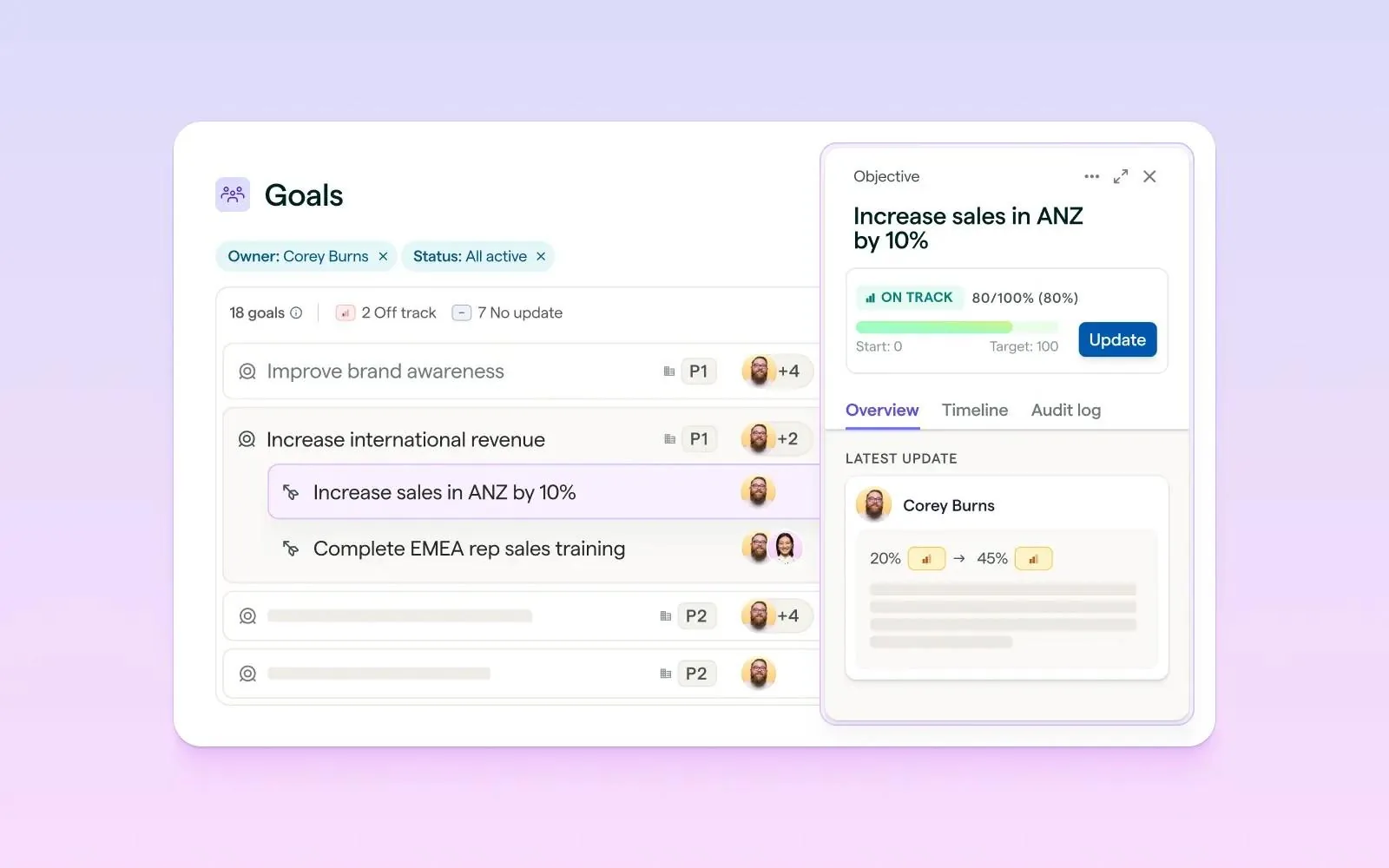
What it does: Lattice brings employee engagement, performance reviews, goal management, and manager development into one people management platform. Its survey tools help HR teams track employee sentiment and connect feedback with wider performance processes.
Why consider Lattice?
Deel Engage includes surveys as one part of a broad talent management suite. Lattice also connects feedback with performance management, but puts particular emphasis on the relationship between engagement, goals, and manager effectiveness.
For example, if you're introducing new management practices, you can use recurring pulse surveys to see how employees respond over time, then consider those findings alongside performance reviews and goal progress.
Its survey capabilities include
- Recurring pulse surveys
- Customizable questions
- Engagement analytics
- Anonymous feedback
Lattice is a good fit if you want engagement and performance management to inform each other. If your main concern is adapting survey questions to investigate emerging employee issues, Eletive offers a more specialized approach to continuous listening.
Limitations and considerations
There are some differences between its survey formats. Its dedicated pulse workflow has question-type and configuration restrictions compared with broader engagement surveys. For example, comment and multiple-choice questions cannot be added to the standard Pulse workflow.
Pricing
- Engagement: US$4 per seat/month, billed annually.
- Performance: US$10 per seat/month.
- Grow: an additional US$4 per seat/month.
- Minimum commitment: US$4,000 annual agreement.
5. Leapsome
Best for: Organizations that want detailed employee survey analytics and structured post-survey action planning.
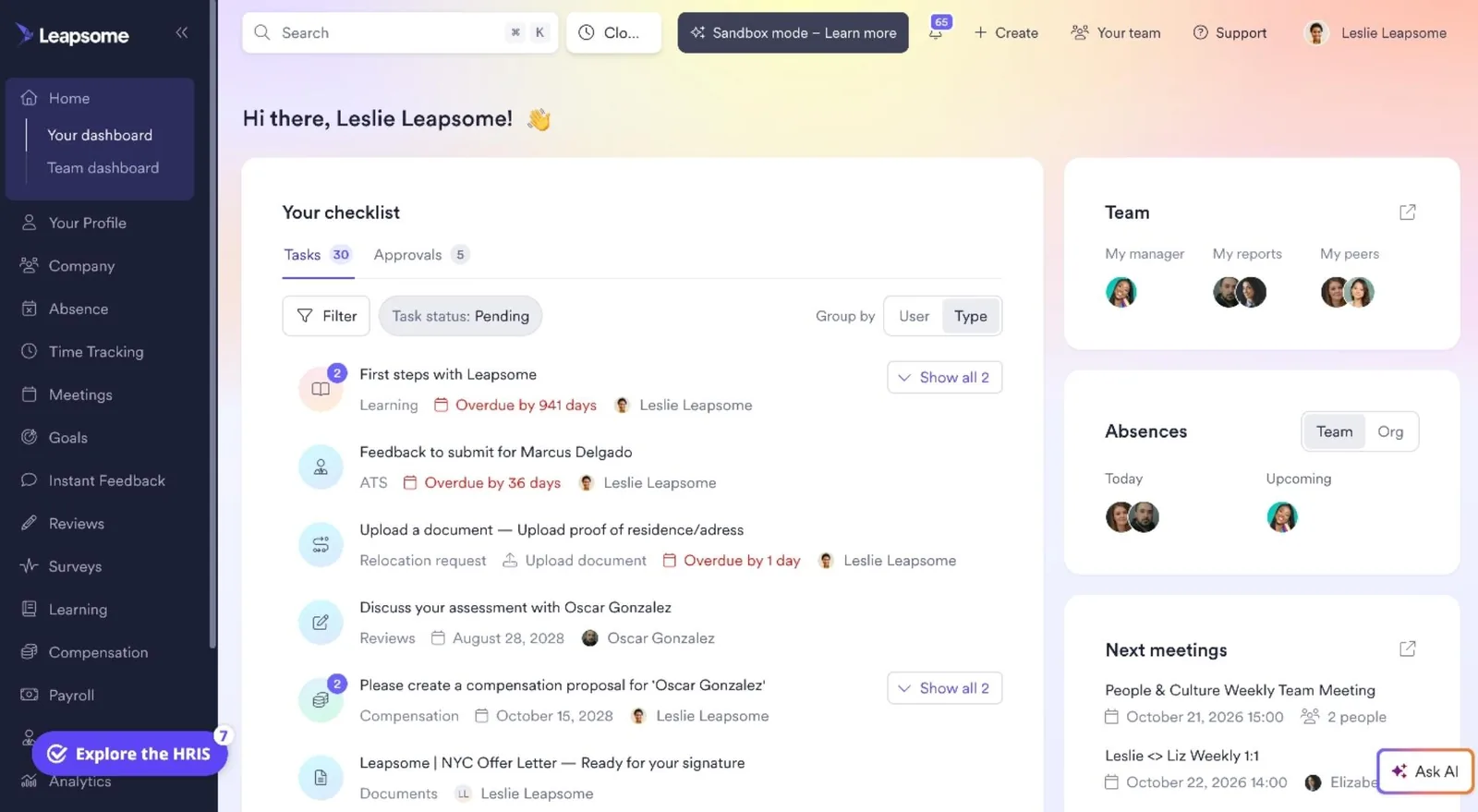
What it does: Leapsome is a people management platform with modules for employee engagement, performance reviews, learning, goals, and compensation. Its Engagement Surveys module helps HR teams collect feedback, understand engagement drivers, and organize follow-up actions.
Why consider Leapsome?
A survey can tell you that engagement is falling, but it takes more work to understand what's contributing to the decline and where to focus first. Leapsome helps with that next step through impact driver analysis, which identifies factors associated with overall engagement scores and suggests areas for improvement.
You can then use its action-planning tools to turn those findings into specific tasks, assign responsibilities, and set deadlines.
Other useful capabilities include
- Science-backed question library
- Survey analytics
- Engagement benchmarking
- Lifecycle surveys
While Lattice connects engagement with performance management, Leapsome puts more focus on identifying engagement drivers and organizing the response.
If the challenge is getting individual managers to turn those findings into better leadership practices, Teamspective offers another layer of support through Lea and company-specific leadership principles.
Limitations and considerations
Leapsome covers much more than employee surveys. So, if you only need to collect feedback and review basic results, you may find its broader platform capabilities unnecessary.
Pricing
- Engagement Surveys: €4 per employee/month.
- Learning: an additional €4 per employee/month.
- Performance Reviews: €7 per employee/month.
- Platform: select the underlying HR platform separately.
6. Workleap Officevibe
Best for: Organizations that want continuous team feedback, anonymous pulse surveys, and direct manager responses.
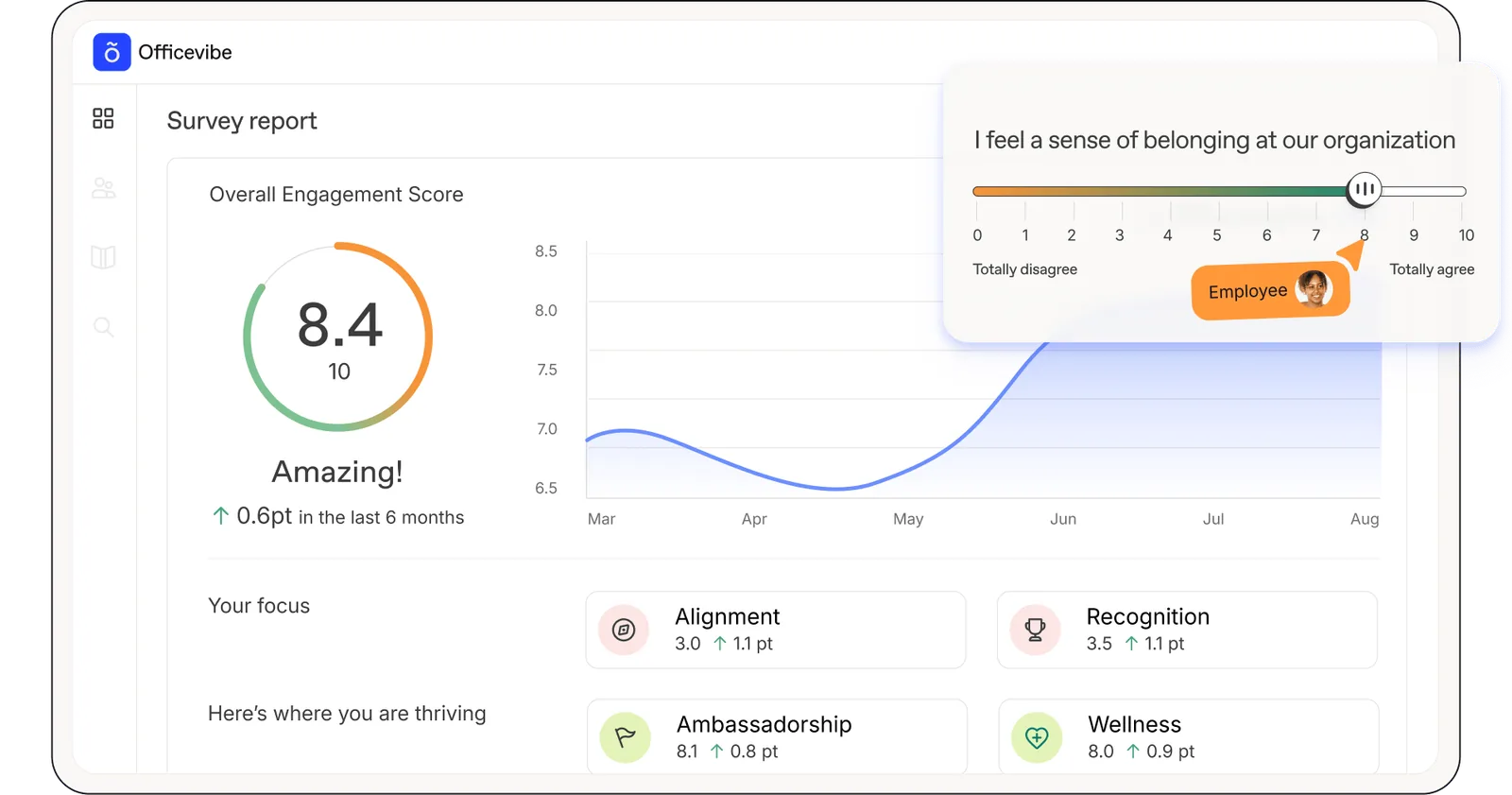
What it does: Workleap Officevibe helps organizations make employee feedback part of regular team communication. It combines recurring pulse surveys, custom questionnaires, anonymous feedback, and team reporting to help managers understand how employees feel about their work.
Why consider Workleap Officevibe?
Some survey platforms put most of their emphasis on HR analytics and organization-wide reporting. Officevibe brings feedback closer to the people who can respond to it: team managers.
Its pulse surveys use personalized questions based on previous employee responses and the engagement metrics that need more data. Employees can also leave anonymous comments, which managers can respond to directly. This creates an opportunity to address concerns before they become recurring problems.
Other useful capabilities include
- Manager responses
- Engagement reporting
- Multiple delivery channels
- Onboarding surveys
Officevibe also has specific anonymity safeguards. Team engagement scores require at least three active respondents, while anonymous written feedback requires a team of at least five members. This helps protect employee identities when managers review feedback.
Limitations and considerations
The anonymity thresholds may limit visibility in smaller teams. If your organization has several small departments or reporting groups, check whether they'll consistently meet the minimum response requirements before choosing Officevibe.
Pricing
- Standard: starts at $4,999 USD/year, plus $32 per manager/month.
- Pro: starts at $11,999 USD/year, plus $32 per manager/month.
- Enterprise: custom pricing for organizations with more than 250 employees. All plans are billed annually.
7. Qualtrics
Best for: Large organizations managing complex employee listening programs and advanced survey analytics.
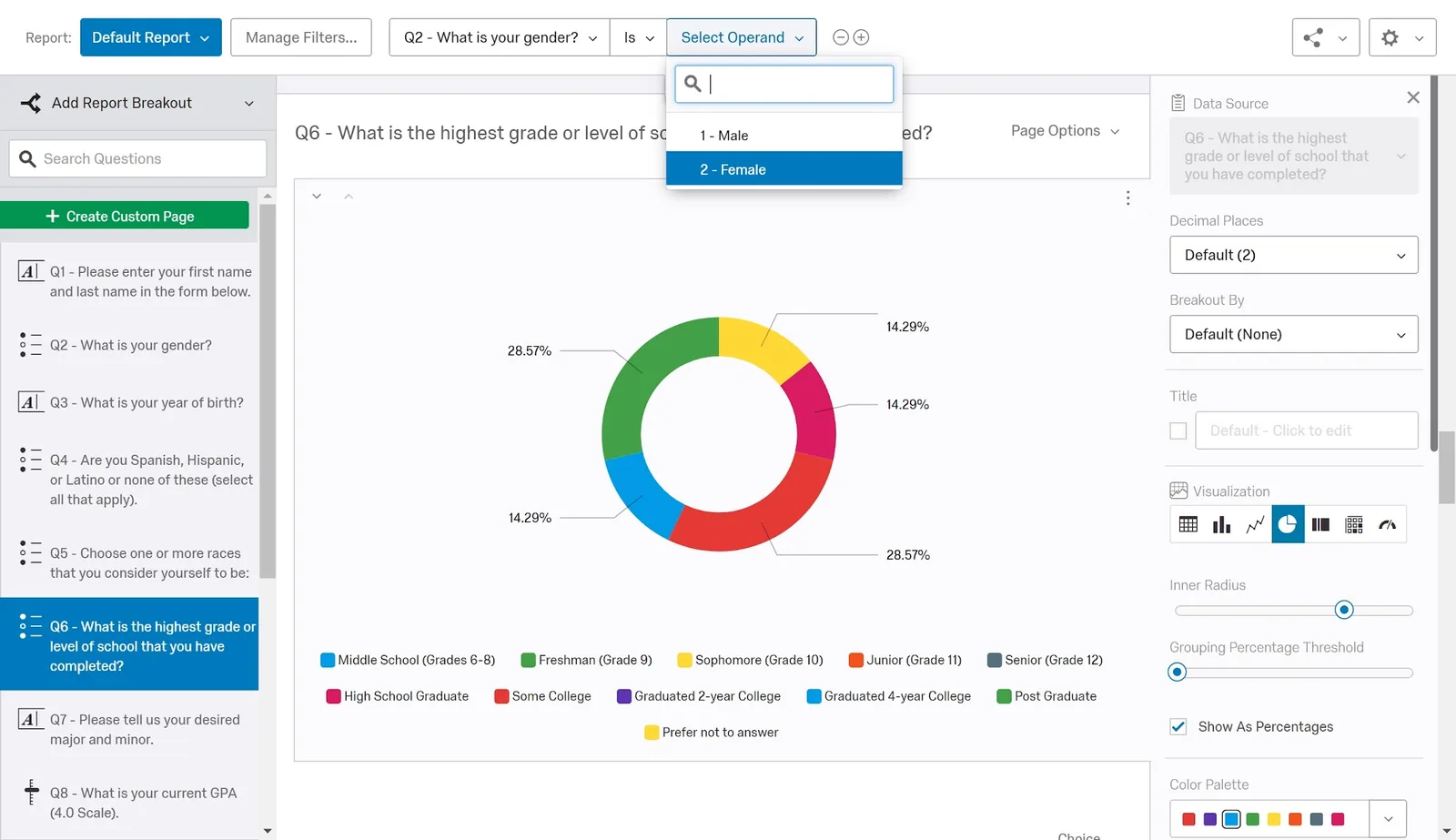
What it does: Qualtrics is an experience management platform with dedicated employee experience capabilities. Its employee engagement software helps organizations collect feedback throughout the employee lifecycle, analyze responses, and identify issues affecting the workforce.
Why consider Qualtrics?
If you're managing employee feedback across multiple departments, locations, and regions, a basic pulse survey tool may not give you enough control or analytical depth. Qualtrics is built for more complex listening programs, allowing you to combine different survey types and examine results across employee groups.
Its relevant capabilities include
- Continuous employee listening
- Advanced analytics
- Action planning
- AI-powered personalization
Officevibe takes a different approach, focusing on regular team feedback and direct manager responses.
Limitations and considerations
Qualtrics offers considerable flexibility, but configuring a complex program can require specialist support. Although it provides guided setup services, templates, and dashboards, you may still need dedicated administrators or analysts to manage survey logic, integrations, permissions, and reporting.
Pricing
- QualtricsXM: Custom quote based on the products, usage, and organizational requirements. Contact Qualtrics for current pricing.
8. SurveySparrow
Best for: Organizations that want conversational survey experiences and flexible recurring feedback collection.
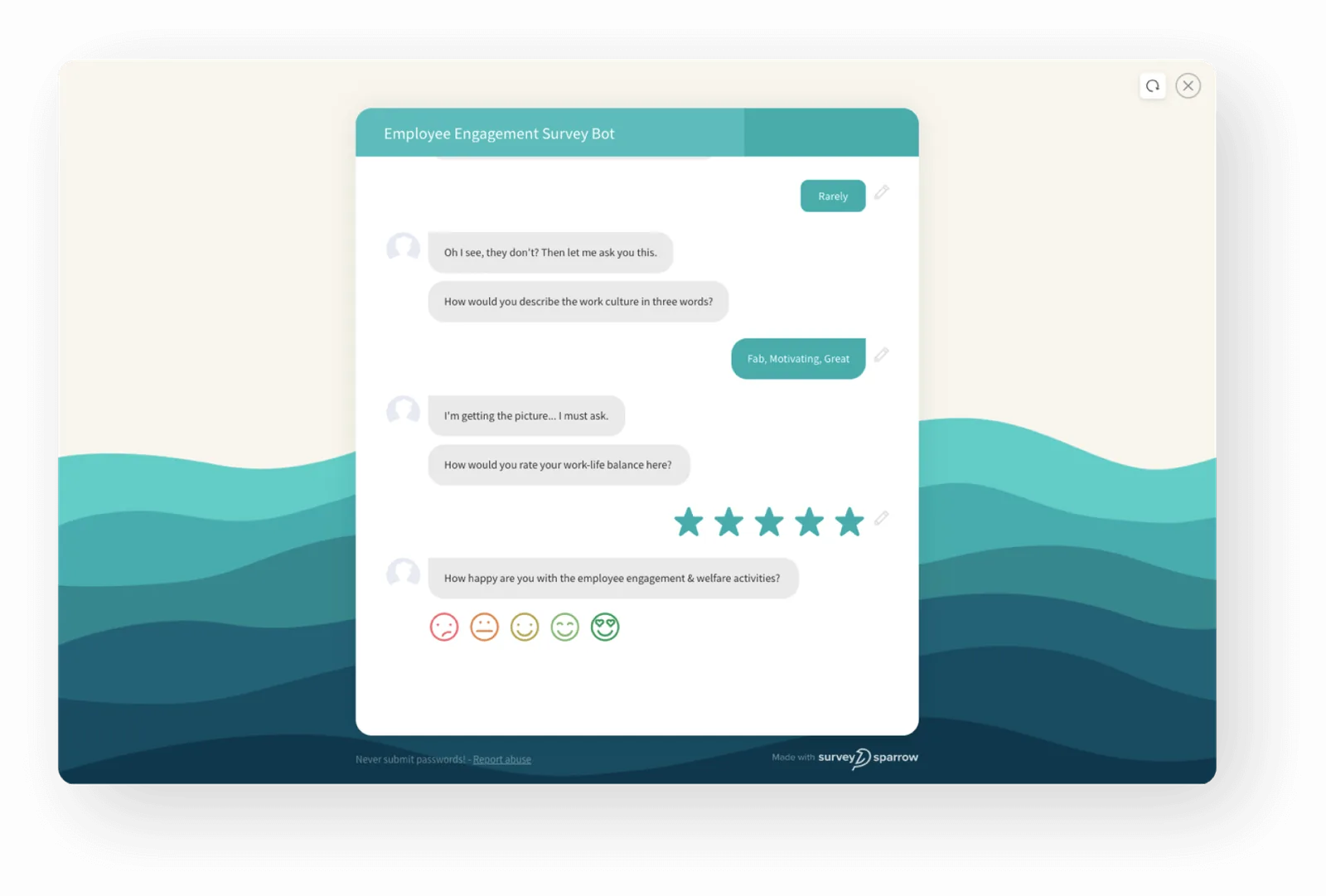
What it does: SurveySparrow is a general-purpose survey and experience management platform. You can use it to create employee pulse surveys, engagement assessments, internal feedback forms, and other workplace questionnaires.
Why consider SurveySparrow?
SurveySparrow's biggest distinction is how it presents questions. Instead of showing employees a long form with multiple questions on one page, its conversational surveys display questions one at a time in an interactive format.
You also get flexibility in how you create and distribute surveys
- Recurring surveys
- Multiple distribution channels
- Customizable questionnaires
- Survey reporting
Limitations and considerations
SurveySparrow is a general-purpose survey platform, not a dedicated employee engagement solution. If you need specialized engagement benchmarks, manager action planning, or structured employee lifecycle programs, check whether its available features cover those requirements before choosing it.
Pricing
- Basic: 2,500 responses /yr, 1 User
- Starter: 15,000 responses /yr, 1 User
- Business:36,000 responses /yr, 3 Users
Pricing depends on the selected plan, response limits, and features.
9. Culture Amp
Best for: Organizations that want research-backed engagement surveys and extensive employee engagement benchmarks.
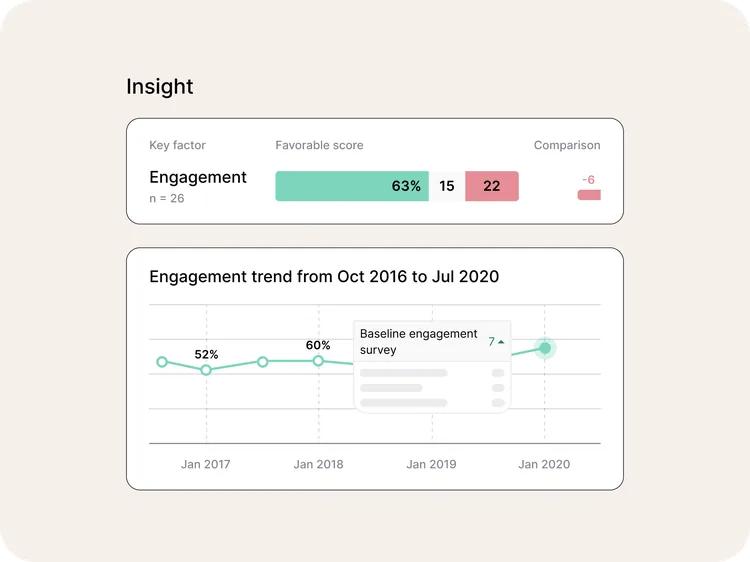
What it does: Culture Amp combines employee engagement surveys with performance and employee development tools. Its engagement platform helps HR teams measure employee sentiment, understand what's influencing engagement, and compare results against external benchmarks.
Why consider Culture Amp?
Collecting employee feedback tells you how people feel about working at your organization. Understanding whether those results are unusual, and what might be driving them, is a different challenge. Culture Amp addresses this with research-backed survey templates and a large benchmarking database.
Its library includes more than 40 ready-to-use survey templates developed by organizational psychologists and data scientists. You can use them as they are or adapt the questions to your organization's priorities.
Other capabilities help you put those findings to use
- Engagement surveys
- Pulse surveys
- AI-powered comment analysis
- Action planning
If you need more than a flexible questionnaire builder like SurveySparrow, Culture Amp offers a more specialized engagement framework. Its benchmarks are particularly useful when you want to put internal results into context rather than simply track whether scores are rising or falling.
Limitations and considerations
Culture Amp's engagement tools are part of a broader platform with separate products for performance and development. Check which modules are included in your proposed package and whether you'll need to pay extra for the capabilities you want.
Pricing
- Culture Amp: custom quote, billed annually.
- Quote scope: pricing depends on employee count, selected products, and service tier. Request engagement-only and combined engagement-and-performance options if you are considering both.
Exploring other employee listening options? Compare Culture Amp alternatives.
10. 15Five
Best for: Organizations that want research-backed engagement surveys, benchmarking, and action planning in one platform.
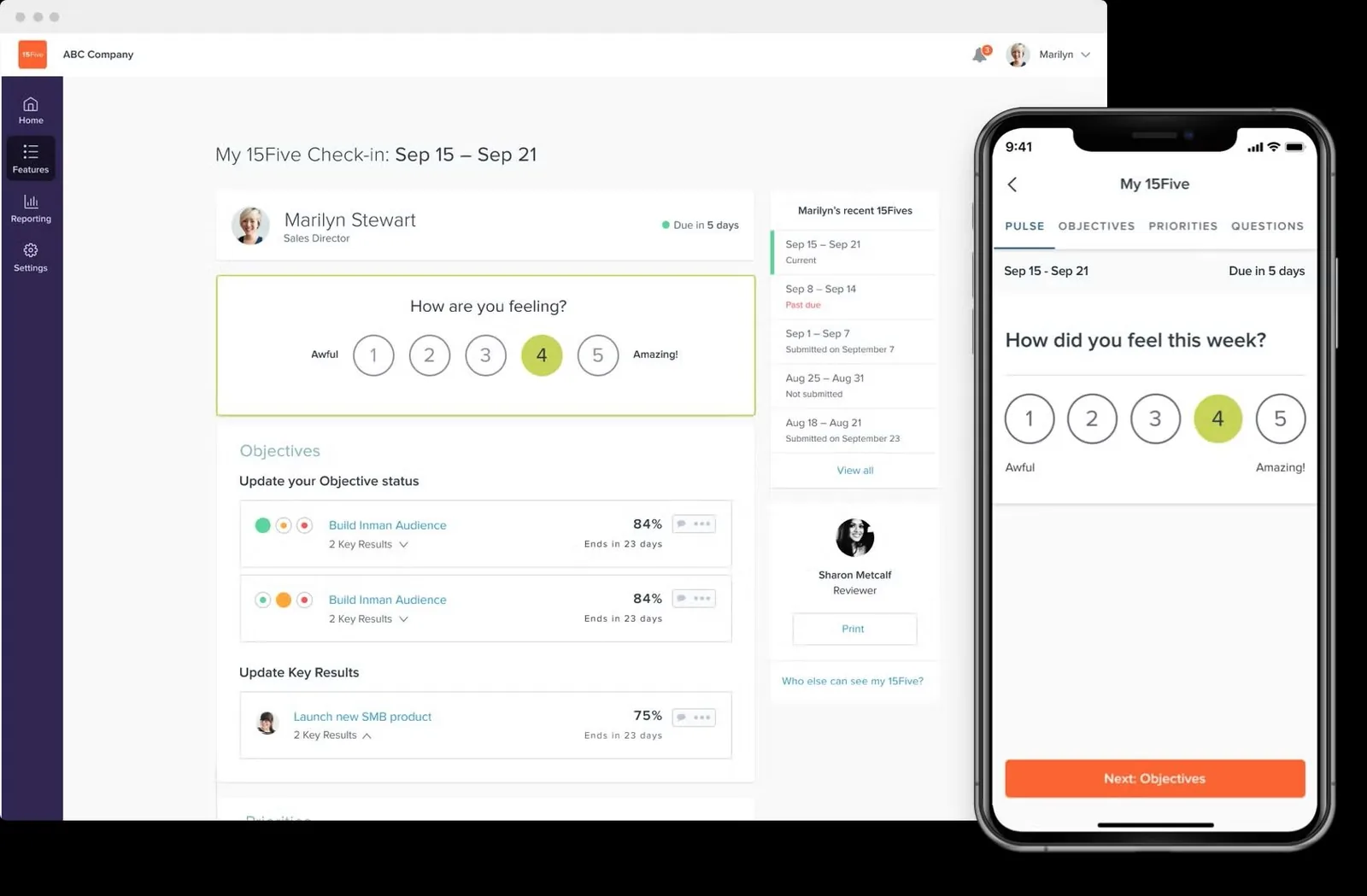
What it does: 15Five's Engage product helps organizations measure employee engagement, understand what's affecting it, and identify areas for improvement. It includes engagement surveys, targeted assessments, lifecycle surveys, analytics, and benchmarking.
Why consider 15Five?
If you want to understand not just whether employees are engaged but what's influencing their experience, 15Five gives you several ways to investigate. Its research-backed survey frameworks cover engagement, manager effectiveness, and team sentiment. You can also create targeted assessments for specific departments or employee groups and add your own questions.
Its other capabilities include
- Lifecycle surveys
- Benchmarking and eNPS
- Survey analytics
- AI-powered analysis
Limitations and considerations
Some of 15Five's broader manager and performance workflows aren't included in the Engage plan. Check which products and add-ons you'll need to get the full functionality you want.
Pricing
- Engage: US$4 per user/month, billed annually.
- Perform: US$11 per user/month, billed annually.
- Total Platform: US$16 per user/month, billed annually.
11. Quantum Workplace
Best for: HR teams running recurring engagement, pulse, and lifecycle surveys with benchmarking and manager-led follow-through.
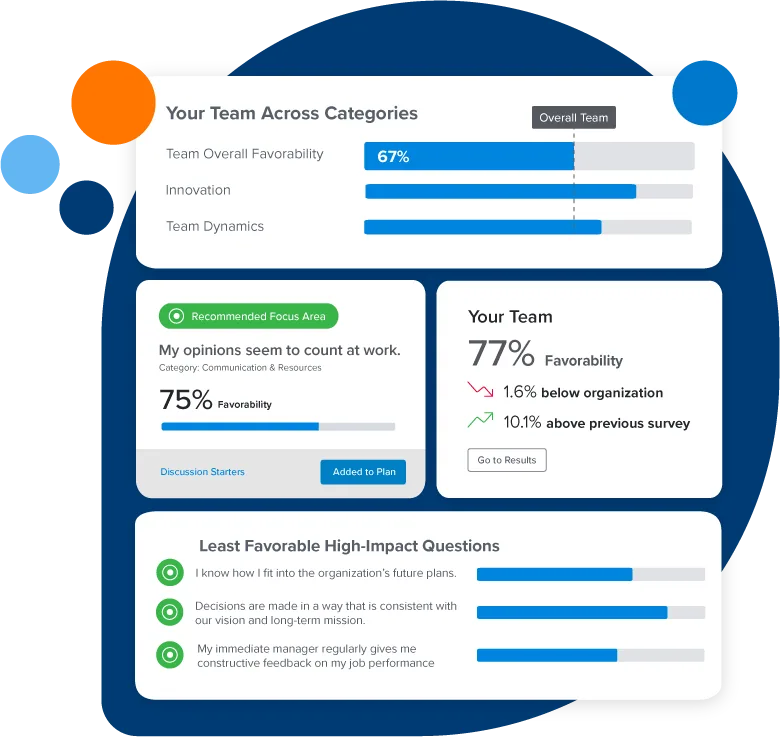
What it does: Quantum Workplace combines employee surveys, analytics, benchmarking, and action planning to help HR teams understand employee sentiment and turn results into improvements.
Why consider Quantum Workplace?
Quantum Workplace supports a structured employee listening program, from collecting feedback to helping managers respond.
- Flexible surveys
- Benchmarking
- Manager follow-through
Limitations and considerations
Quantum Workplace is better suited to organizations building an ongoing engagement program than those looking for a simple, standalone survey tool. Consider whether you need its broader capabilities and implementation requirements.
Pricing
- Quantum Workplace: Packages have a US$15,000 minimum annual contract.
12. WorkTango
Best for: Organizations that need customizable employee surveys, workforce-wide feedback, and actionable reporting.
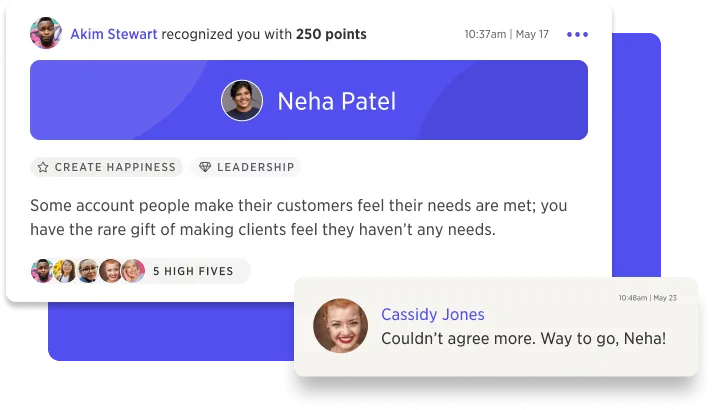
What it does: WorkTango's Surveys & Insights product supports engagement, pulse, lifecycle, and custom surveys. You can buy it separately or as part of the broader employee experience platform, which also includes recognition and rewards.
Why consider WorkTango?
WorkTango is particularly useful for organizations that need to collect feedback from employees across different roles and work environments, including frontline teams.
- Flexible surveys
- Frontline access
- Actionable insights
Limitations and considerations
Check whether you need the standalone Surveys & Insights product or the full platform. WorkTango's annual contracts and implementation requirements may also be more than smaller teams need.
Pricing
- Custom pricing.
- WorkTango offers Surveys & Insights separately or as part of its full employee experience platform.
13. Workday Peakon Employee Voice
Best for: Large organizations that need continuous employee listening, workforce benchmarks, and AI-supported analysis.
What it does: Workday Peakon Employee Voice collects and analyzes employee feedback across engagement, well-being, diversity, and other workplace topics. It uses recurring surveys, benchmarks, and AI-powered insights to help leaders identify issues and plan improvements.
Why consider Workday Peakon Employee Voice?
Peakon is built for continuous listening. Rather than relying on occasional company-wide surveys, it adapts feedback collection over time.
- Adaptive surveys
- Global benchmarks
- AI comment analysis
- Workplace integrations
Limitations and considerations
Workday says deployment takes weeks, so factor implementation and integration time into your decision. It's better suited to organizations with an ongoing listening program than teams that just need occasional surveys.
Pricing
- Contact Workday for a quote based on your organization's requirements and deployment needs.
14. Microsoft Viva Glint
Best for: Mid-sized and large organizations running structured engagement programs with organization-wide reporting.
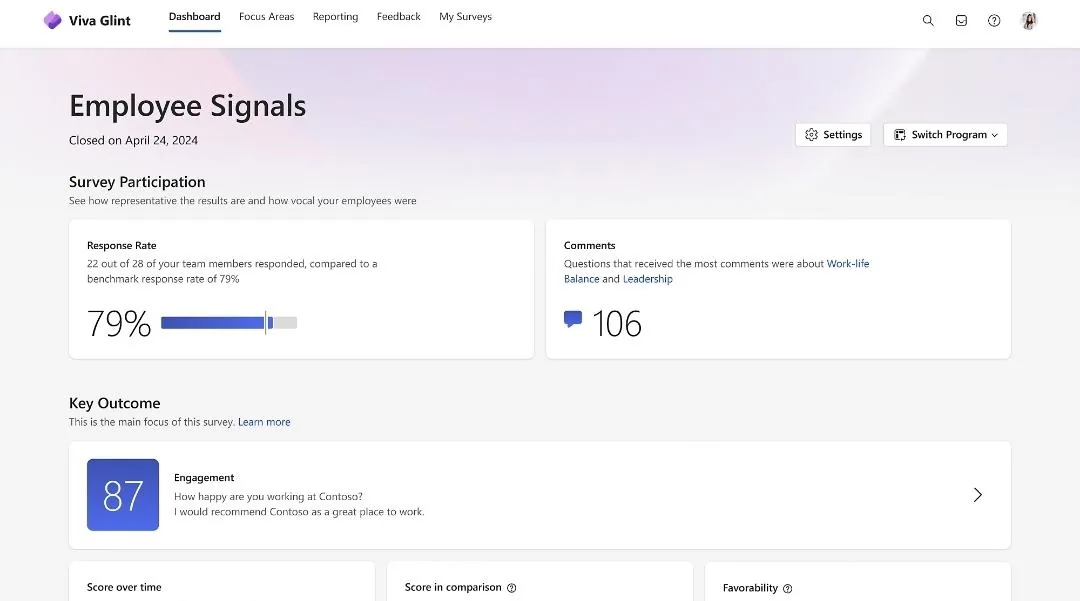
What it does: Microsoft Viva Glint helps organizations measure employee engagement through company-wide surveys, lifecycle feedback, 360-degree assessments, and surveys focused on specific workplace initiatives.
Why consider Microsoft Viva Glint?
Viva Glint gives HR teams a structured way to measure engagement and helps managers turn survey results into focused conversations and improvements.
- Research-backed surveys
- AI-powered analysis
- Guided follow-through
- Microsoft integration
Limitations and considerations
Some integrations and capabilities require additional licensing. For example, Microsoft's Workplace Analytics and Employee Feedback bundle is listed at US$6 per user per month, billed annually. Check which features are included in your existing Microsoft plan before budgeting.
Pricing
- Microsoft Viva Glint: $2 per user per month, billed annually, with a 50-seat minimum.
- Viva Workplace Analytics and Employee Feedback plan: $6 per user per month and includes additional capabilities.
For more listening tools in and beyond Microsoft 365, see these Viva Glint alternatives.
15. SurveyMonkey
Best for: Organizations that need a flexible survey builder for employee feedback, internal research, and one-off questionnaires.
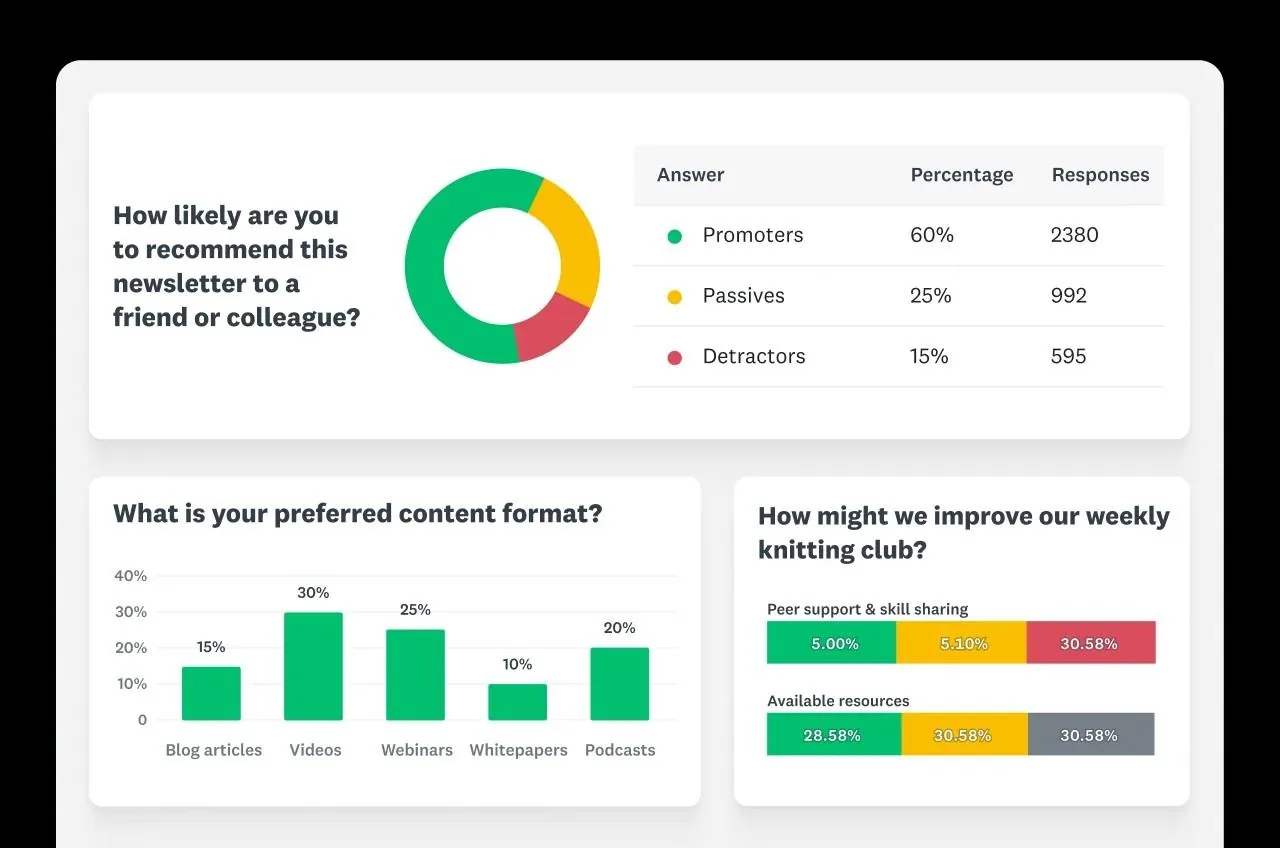
What it does: SurveyMonkey is a general-purpose survey platform that HR teams can use to create and analyze employee satisfaction surveys, onboarding questionnaires, and other workplace feedback forms.
Why consider SurveyMonkey?
If you don't need a full employee listening program, SurveyMonkey gives you the flexibility to build surveys around specific questions and distribute them across your organization.
- Flexible survey creation
- Survey logic
- Distribution and analysis
- Privacy controls
Limitations and considerations
SurveyMonkey is not a dedicated employee-engagement platform, so it lacks the structured listening, benchmarking, and manager action-planning focus of tools such as Culture Amp or Viva Glint. Check plan limits before committing.
Pricing
- Team Advantage: US$30 per user/month, billed annually, with a three-user minimum.
- Minimum annual cost: US$1,080 for three users.
- Responses: 50,000 per year included; additional responses cost US$0.15 each.
How AI Can Help With Employee Surveys
AI can help HR teams analyze large volumes of employee feedback, identify recurring concerns, and turn survey findings into actionable insights. Instead of manually reviewing hundreds of comments, teams can use AI-powered features to summarize responses and highlight issues that need attention.
Analyze Open-Ended Responses
Rating scales show how employees feel, but written comments often explain why. AI-powered text analysis can categorize responses, identify recurring topics, and summarize employee concerns.
A 2025 research study published in the Journal of Business Analytics, titled Inferring Employee Concerns from Open Text Survey Responses, examined different machine-learning approaches to analyzing employee survey comments. The researchers found that open-ended responses often revealed concrete workplace concerns that weren't captured by structured survey questions. Their findings demonstrate how text analysis can help organizations uncover additional employee perspectives.
Identify Emerging Issues and Patterns
AI can analyze feedback across survey cycles to highlight recurring concerns or changes in employee sentiment. For example, an increase in comments about workload, management communication, or career development could signal an issue that HR teams need to investigate.
However, recurring complaints don't automatically reveal their causes. Sentiment analysis can also miss context, sarcasm, and differences in how employees express themselves. HR teams should review original comments before drawing conclusions.
Support Manager Follow-Up
Some platforms use AI to summarize team feedback, highlight improvement areas, and suggest actions managers can consider.
Qualtrics introduced several AI-powered employee experience capabilities at its March 2026 X4 event, including conversational feedback, employee retention analytics, and personalized action recommendations for managers. These features illustrate how AI can support different stages of employee listening, from gathering more detailed responses to helping managers interpret findings and plan follow-up.
What to Consider Before Using AI
AI should support employee listening, not replace human judgment. Before choosing a platform, check how it protects sensitive employee data, controls access to survey responses, and allows HR teams to verify AI-generated summaries.
How to Implement an Employee Survey Tool
Start with a clear objective and choose a survey format, frequency, and delivery method that fit your workforce. For example, frontline employees may need mobile access, QR codes, or kiosks.
Write clear, neutral questions and explain whether responses are anonymous or confidential, who can see results, and what reporting thresholds apply. Share the survey’s purpose and let employees know when they can expect results.
Once responses are in, share the main findings, prioritize a few issues, and assign responsibility for follow-up. Use subsequent surveys to assess progress and tell employees what has changed.
Frequently Asked Questions About Employee Survey Tools
How often should companies conduct employee surveys?
Choose a frequency that gives your team time to review and act on feedback. You might combine a broader annual survey with shorter pulse surveys and collect lifecycle feedback during onboarding or exit.
Are employee surveys anonymous?
They can be anonymous, confidential, or identifiable, depending on the settings. Small teams, demographic filters, and comments can still reveal identities, so check reporting thresholds and explain privacy rules before launch.
What is the difference between pulse surveys and annual employee surveys?
Annual surveys typically assess engagement and workplace factors more broadly. Shorter, more frequent pulse surveys can track specific issues or changes between them.
Can AI analyze employee survey responses?
Yes. Some platforms summarize comments, group themes, and identify sentiment patterns. Review the original feedback before acting, as AI can miss context or misinterpret responses.
Choose an Employee Survey Tool That Helps You Act on Feedback
The right employee survey tool should help you collect relevant feedback, identify workplace issues, and decide what to improve. SurveyMonkey suits flexible questionnaire building, while Culture Amp and Qualtrics offer more specialized engagement capabilities.
Teamspective goes a step further by connecting employee engagement, performance, and collaboration with your company's strategy, values, and leadership principles. Every manager gets Lea, who helps turn team insights into practical conversations and follow-up actions.
If you want to help managers act on employee feedback, book a demo to see how Teamspective works.
Book a demo


