
13 Best Performance Review Software: Tools, Importance and Impact
February 28, 2026
Performance review software determines whether managers develop their teams or just document them. This guide compares 13 tools across features, pricing, and fit — from continuous feedback platforms to HRIS-integrated review cycles.
Performance review software helps organizations collect feedback, track goals, and support manager development without relying on annual review cycles. The best tools reduce administrative burden for HR, surface actionable insights for managers, and give employees consistent, meaningful input. This guide covers the 13 strongest options in 2026, with pricing, key features, and guidance on how to choose.
Key Findings
- Annual reviews suffer from recency bias and low manager follow-through — continuous feedback tools address both
- The strongest platforms combine feedback with engagement data and workflow integrations (Slack, Teams)
- Teamspective, Leapsome, and Lattice are the most complete options for companies with 100+ employees
- Pricing ranges from ~€1.25/user/month (Zoho People) to $49+/user/month (Deel) — most mid-market tools sit between $5–$10
- Choosing the right tool depends on team size, existing HR tech stack, and whether managers or HR are the primary users
What is Performance Review Software?
Performance review software has emerged as an important tool for organizations looking to improve leadership effectiveness, enhance employee performance, and build a stronger feedback culture. It is a digital tool designed to streamline the process of evaluating employee performance, collecting feedback, and supporting professional development.
What types of performance review software exist?
Modern performance review software typically includes: goal setting and tracking, performance evaluation templates, feedback collection mechanisms, personal development planning tools, analytics and reporting, and integration with other HR systems.
Why is continuous performance management better than annual reviews?
Continuous performance management
Switch from annual reviews to regular check-ins. Collect, analyze, and act on data faster with Teamspective.
Learn moreWhy does continuous feedback outperform annual reviews?
Several distinct approaches to performance evaluation have emerged, each with unique benefits:
360-Degree Feedback Systems: These platforms collect input from an employee’s peers, supervisors, direct reports, and sometimes even customers. This multi-source approach provides a more holistic view of performance and reduces individual bias.
Self-Assessment Tools: These solutions emphasize employee reflection and ownership of their performance journey, often paired with manager evaluation for balanced perspectives.
Project-Based Evaluation Systems: These focus on assessing performance within specific projects or objectives, ideal for organizations using agile methodologies or project-based work structures.
How does the shift to continuous performance management work in practice?
One of the key advantages of using software for regular check-ins is how it addresses fundamental issues with traditional performance reviews. Having witnessed the limitations of annual review cycles, I co-founded Teamspective in 2020 specifically to address these critical gaps in performance management.
When you ask for feedback more frequently, it eliminates the recency bias. If you ask once a year how someone has been performing, most of the answers will only relate to what the person has been doing in the past three to six months, not really the full year. If you collect the feedback more frequently, you will always get fresh insights. It’s more accurate, and then you can build on it over time.
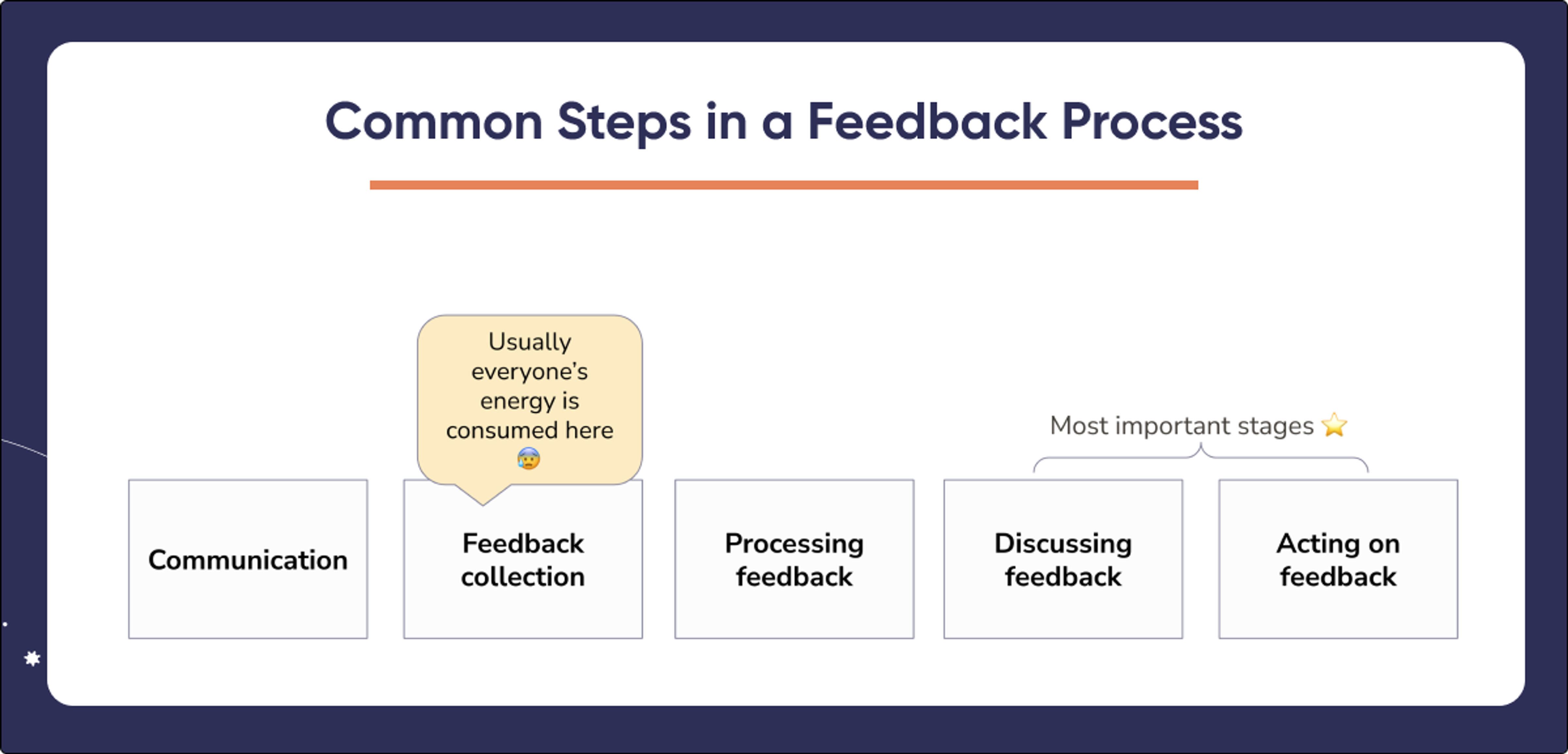
This shift from annual or biannual reviews to continuous feedback is then accelerated by automation and integration capabilities. If you have software that is integrated with the rest of your HR software, it can be easier to do more frequent surveys throughout the year than one annual engagement survey through a manual process.
Which performance review software tools are worth considering in 2026?
The tools below were selected based on feature depth, integration capabilities, user feedback, and fit for companies with 100–5,000 employees. Teamspective is included as the platform behind this article — its description reflects the same factual format applied to all other tools.
1. Teamspective

Best for: Growth organizations seeking an integrated approach to performance, engagement, and collaboration
Key Features:
- Full integration with communication platforms (Slack, MS Teams)
- Customizable review templates aligned with company values
- AI Agent for summarizing feedback and crafting discussion agendas
- Unique Organizational Network Analysis (ONA) insights
- Real-time feedback mechanisms
Teamspective combines performance management with pulse surveys and organizational network analysis (ONA), giving HR teams and managers a connected view of feedback, engagement, and collaboration patterns across the organization.
Pricing: Starts at €5.50 per seat/month (up to 300 seats). Free trial available.
2. Lattice
Best for: Mid-sized companies looking for comprehensive performance and engagement tools
Key Features:
- Goal and OKR tracking
- 1-on-1 meeting facilitation
- Growth management
- Employee engagement surveys
- Robust analytics
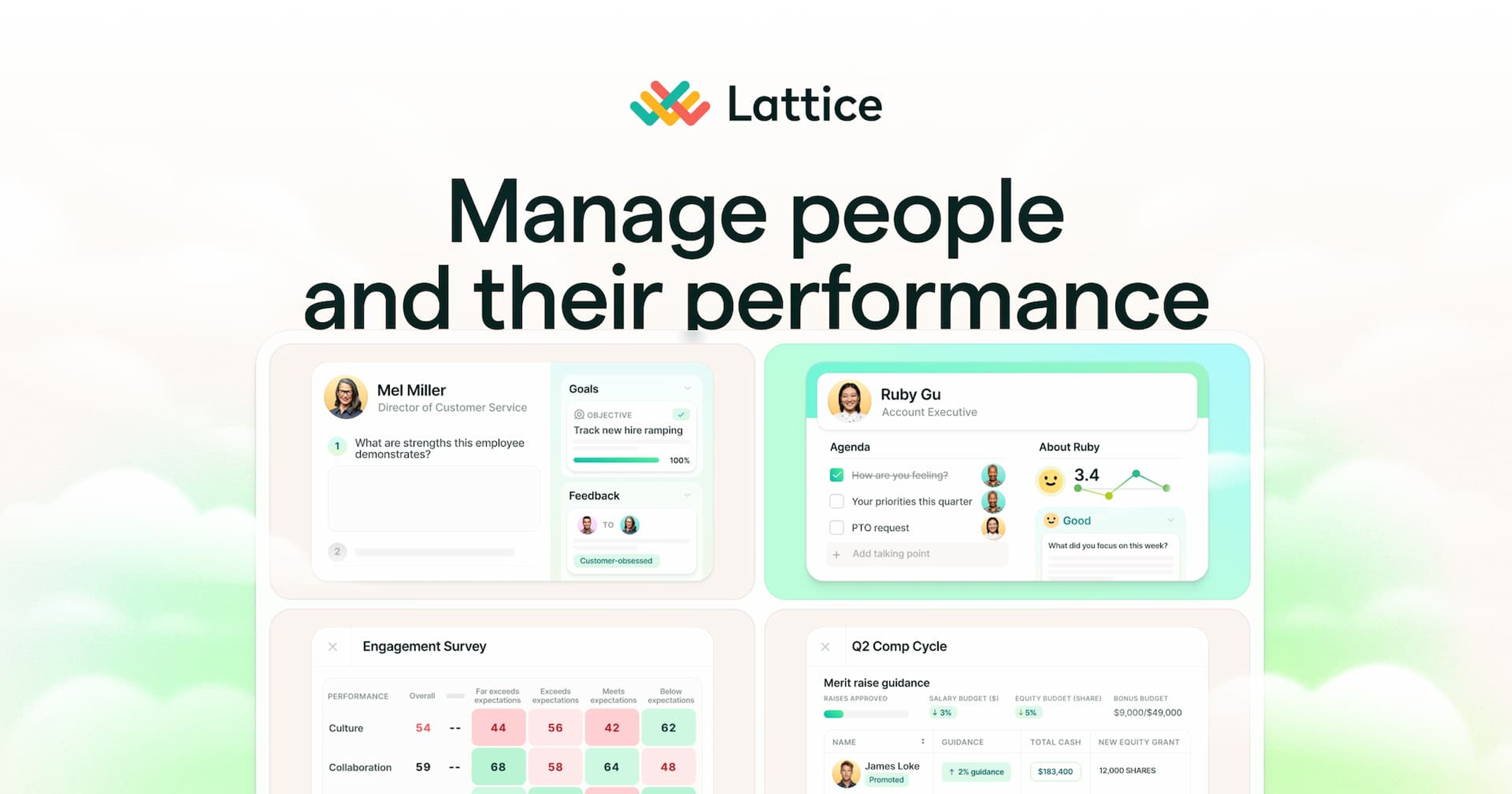
Lattice provides a well-rounded approach to performance management with strong goal-setting capabilities and analytics. Its interface is intuitive, making adoption straightforward across organizations.
Pricing: Starting at approximately $10 per user per month with tiered pricing based on company size and module selection.
3. Small Improvements

Best for: small to midsize organizations that want continuous feedback without complex workflows
Key Features:
- Performance reviews (with AI Writing Assistant)
- 360-degree feedback
- Shared 1:1 agendas
- Goal and objectives tracking
- Pulse surveys
- Praise
Small Improvements prioritizes simplicity and usability while supporting continuous development. The platform’s AI Writing Assistant strengthens feedback clarity, 1:1s track action items efficiently, and goal management aligns individual efforts with team priorities.
Pricing: Starting from $3 per user per month. Free 30-day trial available.
4. Leapsome

Best for: European companies seeking GDPR-compliant performance solutions
Key Features:
- Learning management integration
- Goal and OKR tracking
- Customizable review cycles
- Engagement surveys
- Analytics and insights
Leapsome excels in creating alignment between individual performance and company objectives, with particularly strong learning and development integration.
Pricing: Starting at $8 per user per month, with additional modules for engagement surveys and learning management available. Free trial available.
5. HiBob

Best for: Fast-growing companies with dynamic organizational structures
Key Features:
- HRIS integration
- Customizable workflows
- Performance review cycles
- Goal setting and tracking
- Culture and engagement tools
HiBob combines core HR functionality with performance management, making it ideal for companies seeking to consolidate their HR tech stack.
Pricing: Approximately between $16 and $25 per employee per month.
6. 15Five

Best for: Companies focused on creating a continuous feedback culture
Key Features:
- Lightweight check-ins
- OKR tracking
- Recognition tools
- Engagement measurement
- 1-on-1 meeting agendas
15Five takes a lightweight, frequent approach to performance management that emphasizes regular feedback and recognition.
Pricing: Starts at $7/user/month, with higher tiers for advanced features.
7. BambooHR

Best for: Small to mid-sized businesses needing integrated HR and performance solutions
Key Features:
- Integrated HRIS
- Self and manager assessments
- Goal tracking
- Time tracking integration
- Mobile accessibility
BambooHR offers a straightforward approach to performance management as part of its broader HR platform.
Pricing: Combined pricing typically ranges between $12-22 per employee per month.
8. Deel

Best for: Companies with international teams and contractors
Key Features:
- Global compliance tools
- Performance management for distributed teams
- Goal setting and tracking
- Global payment capabilities
- Multi-language support
Deel specializes in managing international teams, making it ideal for global organizations.
Pricing: Custom pricing based on organization size and global footprint, starting at $49 per user per month.
9. Workleap (formerly Officevibe)

Best for: Teams focused on employee experience and engagement
Key Features:
- Pulse surveys
- Real-time feedback
- Recognition tools
- 1-on-1 facilitation
- Anonymous feedback channels
Workleap emphasizes the connection between engagement and performance with strong feedback mechanisms.
Pricing: Starts at $4 per user per month.
10. ThriveSparrow

Best for: Companies looking for an affordable yet comprehensive solution
Key Features:
- Customizable review templates
- 360-degree feedback
- Recognition tools
- Goal management
- Lightweight surveys
ThriveSparrow offers a cost-effective approach to performance management with essential features for growing organizations.
Pricing: Starts at approximately $4 per user per month.
11. Zoho People

Best for: Organizations already using Zoho products
Key Features:
- Integrated HRIS
- Performance appraisal tools
- Goal cascading
- Feedback mechanisms
- Reporting and analytics
Zoho People integrates with other Zoho products, making it a natural fit for organizations already using the Zoho ecosystem.
Pricing: Starts at approximately $1.25 per user per month.
12. Primalogik

Best for: Companies seeking flexible performance review options
Key Features:
- 360-degree feedback
- Custom review cycles
- Goal tracking
- Survey tools
- Succession planning
Primalogik offers highly customizable review cycles to match your organization’s unique needs.
Pricing: Starts at $4 per user per month.
13. PerformYard

Best for: Companies requiring high compliance and documentation
Key Features:
- Flexible review processes
- Form designer
- Goals and competencies
- Real-time reporting
- Secure documentation
PerformYard excels in documentation and compliance aspects of performance management.
Pricing: Starts at $5 per user per month.
Why invest in performance review software?
The cost of ineffective performance management extends far beyond the administrative burden. Poor performance processes can lead to disengagement, reduced productivity, and ultimately, talent loss. Here’s how performance review software delivers value to different stakeholders:
What does performance review software do for HR teams?
- Streamlined Processes: Automate routine tasks and reduce administrative burden
- Better Data: Gather consistent, structured data for organizational insights
- Compliance: Maintain proper documentation and ensure fair treatment
- Strategic Focus: Shift from administration to people development
What does it do for managers?
- Time Savings: Reduce preparation time and documentation effort
- Actionable Insights: Access data-driven recommendations for team development
- Consistent Approach: Follow structured processes that ensure fair treatment
- Development Support: Tools to have meaningful conversations
Choosing the right performance review software can significantly reduce the administrative burden attached to running, analyzing, and following up on performance reviews.
What does it do for employees?
- Fair Assessments: Receive balanced feedback from multiple sources
- Regular Feedback: Get timely input instead of waiting for annual reviews
- Growth Opportunities: Clear development plans based on performance data
- Voice: Platforms to share feedback and contribute to organizational improvement
What does it do for leadership?
- Strategic Talent Insights: Understand organizational performance patterns
- Development Planning: Identify future leaders and critical skill gaps
- Retention Risk Mitigation: Spot engagement issues before they lead to turnover
- Cultural Alignment: Reinforce company values through performance processes
How does performance review software reduce bias?
One significant advantage of performance review software is its ability to reduce bias in evaluation processes. Jose Kantola explains:
“People always tend to have some sort of filter, adjusting their responses based on who is asking. When software is used to collect the inputs, it can be more honest or more open and less biased in that way.”
Modern AI-powered solutions take this a step further. Since AI is very good at processing large amounts of data (like multiple anonymous survey comments or feedback forms), it can help summarize the results into compact and objective bullet points. Leaders and managers can then use these insights for future team or 1:1 discussions.
Software can also help identify and correct for systematic biases in ratings. As Kantola highlights:
“Smart use of software can make it easier to pinpoint data sources that are biased. If you ask people to rate each other or managers to rate their direct reports, there are always some managers who tend to rate others more positively and some who are more critical. This kind of rater bias is common and very real. And if the software works in a smart way or has good reports, it’s really easy to pick those up and then balance the outputs.”
How does performance review software affect organizational culture?
Exceptional organizational culture is crucial to a company’s performance. According to Deloitte, 94% of executives and 88% of employees believe a distinct workplace culture is important to business success.
Performance review software fundamentally transforms how organizations approach performance and development. Implementing the right software can reshape your organizational culture in multiple ways.

How do you align performance reviews with company values?
Good performance review software allows you to customize the questions in a way that aligns with your culture. So you can use the reviews to reinforce the topics that are relevant to your organization.
For example, if you want to reinforce a feedback culture, you could include a specific question like, ‘Are you frequently giving feedback to your peers or to your manager?’ In some cases, it even makes sense to craft a whole list of questions where every one of them corresponds with your company values.
How does software create consistency in leadership behaviors?
Leaders and people managers are the foundation of organizational culture. According to Gallup research, managers account for 70% of the variance in team engagement scores — making leadership quality the single biggest lever organizations have for improving engagement.
Performance software helps standardize how leaders approach development conversations. Since company culture is a result of repeated behaviors, software can help the team pay attention to and emulate behaviors that reinforce the organizational culture.
How do performance processes influence transparency and communication culture?
The design of your performance process can significantly impact organizational culture. Jose Kantola has observed in their clients’ cases that how you conduct performance reviews affects organizational culture by encouraging different attitudes. According to Kantola,
“The level of detail and the level of transparency also can drive your culture. For example, do you want to use quantified metrics in performance reviews or only open-ended questions? That will influence the kind of discussions and then the culture. The same with how transparent you are. Do you want the employees to immediately get access to all the feedback they have received? Or is there a process where first HR gets access, then the managers will discuss it with people?”
How does software shift reviews from evaluative to developmental?
By facilitating more frequent, less formal check-ins, performance review software shifts the perception of performance discussions from evaluative to developmental. This reduces anxiety and increases openness to feedback.
What is the connection between performance review software and psychological safety?
Psychological safety is one of the core pillars of employee engagement. According to Gallup, workplaces with higher psychological safety see up to 76% more engagement and a 27% reduction in turnover.
Regular, structured feedback exchanges normalize constructive conversations, making it safer to discuss challenges and areas for improvement. When the entire organization follows similar processes, there’s less stigma attached to development needs.

Where is performance management software heading?
The performance management software market continues to evolve, with several emerging trends poised to reshape how organizations approach employee development:
How is AI changing performance management?
Artificial intelligence is transforming performance management from descriptive to predictive and prescriptive analytics. AI can now:
- Analyze large sets of data to identify collaboration barriers
- Recommend development resources based on cumulative performance data
- Predict potential retention risks by flagging burnout issues, dips in eNPS scores, and more
- Draft conversation points for managers to address specific development needs
The extensive use of AI in HR software can help leaders act faster, save time in planning, and raise the quality of leadership across departments. As Jose Kantola emphasizes:
“Most leadership training materials and culture handbooks gather dust. A better way is to train an AI model with your company’s assets to provide relevant coaching to leaders just at the right time.”
How are performance and employee well-being becoming more connected?
Future performance tools will take a broader view of employee experience, recognizing that performance cannot be separated from engagement, well-being, and sense of purpose. Leading platforms are already beginning to incorporate:
- Workload management capabilities
- Burnout risk identification
- Connection between performance and engagement metrics
- Work-life balance considerations in goal setting
What role does organizational network analysis play in performance management?
The next frontier in performance management focuses not just on individual contributions but on how effectively people collaborate. Organizations like Teamspective are pioneering this approach to help identify:
- Collaboration bottlenecks
- Knowledge sharing patterns
- Informal leadership networks
- Cross-functional team effectiveness
What is skills-based performance evaluation?
As job roles become more fluid, performance management is moving from role-based to skills-based assessment. Future systems will:
- Map skills across the organization
- Identify skill gaps and development opportunities
- Connect performance with learning recommendations
- Support internal mobility based on demonstrated capabilities
Conclusion
The right performance review software should ultimately transform leadership effectiveness, employee development, and organizational performance, regardless of where and how people work.
Whether you choose an integrated solution like Teamspective that combines performance, engagement, and collaboration insights, or opt for a specialized tool focused on specific aspects of performance management, the key is selecting software that elevates your approach beyond administrative performance reviews to meaningful development conversations that drive organizational success.
Frequently Asked Questions
What is performance review software?
Performance review software streamlines employee evaluations, feedback collection, goal tracking, and development planning. It replaces manual processes with automated, data-driven tools that integrate into existing HR systems and workflows.
What is the best performance review software in 2026?
The best tool depends on your organization's size and priorities. Teamspective suits companies that want performance, engagement, and collaboration data in one place with native Slack and Teams integration, starting at €5.50 per seat/month. Leapsome is strong for DACH-region companies, Lattice for US-centric organizations with broad feature needs, and Workleap for teams prioritizing simplicity and engagement.
Why is continuous performance management better than annual reviews?
Continuous feedback eliminates recency bias. When you ask once a year, most responses reflect only the past three to six months. More frequent check-ins give fresher, more accurate data that managers can act on in real time rather than waiting until the next review cycle.
How does performance review software improve company culture?
It creates consistency in how leaders approach development conversations, aligns reviews with company values, and normalizes feedback as an ongoing part of work rather than an annual event. Regular structured feedback also builds psychological safety over time.
How do I get managers to actually use performance review software?
Adoption depends on reducing friction and making the value visible to managers, not just HR. Tools that integrate into Slack or Teams rather than requiring a separate login see significantly higher response rates. Providing managers with ready-made talking points and team summaries — rather than raw data — also drives consistent use.


